
You open a chat and see a single word: “wys.” No context, no emoji, just three small letters. What does it mean? Is it a question, a joke, or a challenge? Many people feel stuck at this exact moment.
In this guide, you will learn the WYS meaning in text, chat, and social media. “Wys” most often means “what you saying?” It helps people ask for clarity, show surprise, or react to a bold message. You will also see real examples, tone tips, and easy ways to reply in 2026.
What Does “wys” Mean in Text?
“Wys” is a short form used in texting and chat. It comes from the phrase “what you saying?” People drop the extra letters to type faster. The result is three small letters that carry a full question. The term sits in the same family as “wyd” (what you doing) and “wym” (what you mean). All of these start with “w” and “y.”
That makes them easy to confuse at a glance. Most people use “wys” in quick, relaxed talk. It shows up in direct messages, group chats, comment sections, and gaming lobbies. You rarely see it in formal writing.
Featured Snippet Answer: What Does WYS Mean?
- WYS stands for “what you saying?” or “what you say?”
- It asks someone to repeat, explain, or defend what they just said.
- It is informal slang used in texts, DMs, and social media comments.
- The tone can be curious, confused, playful, or challenging.
The Most Common Meanings of “wys”
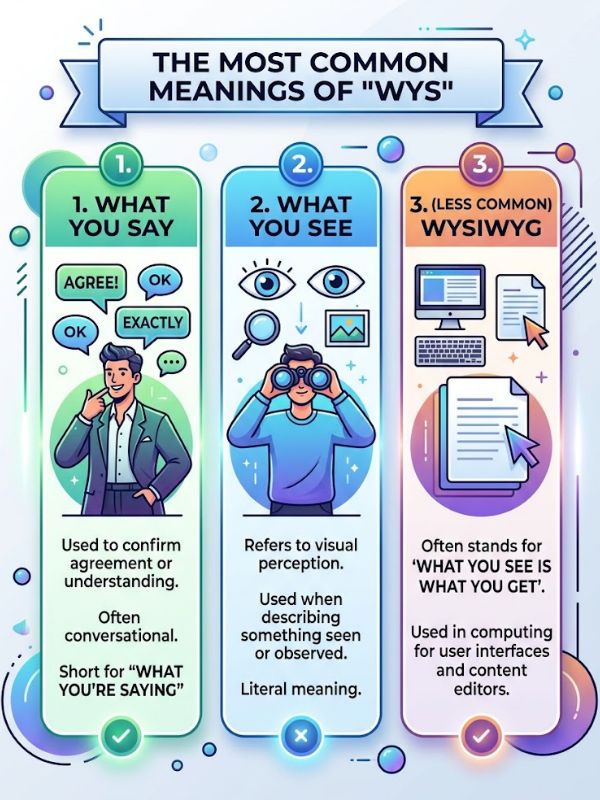
The word has a few meanings. They overlap, so context matters a lot. Here is a quick table before we look at each one.
| Meaning | What It Signals | Typical Tone |
| What you saying? | Asking for clarification | Neutral or curious |
| What you say? | Asking for an opinion or reply | Friendly or casual |
| Confused reaction | Showing surprise or doubt | Puzzled |
| Challenging question | Pushing back on a statement | Firm or sharp |
1. “What You Saying?”
This is the main meaning. It works like “what are you saying?” or “what do you mean?” The sender did not understand you, or did not expect what you wrote. Here is an example.
Person A: I think I’m moving to Canada next month.
Person B: wys?? Since when?
Person B is surprised and wants more detail. The question marks add shock. This is the most common use you will see. People also use it when a message is unclear. If your text has a typo or a missing word, a friend may reply “wys” to ask you to fix it.
2. “What You Say?”
Some people use “wys” to ask for your answer or opinion. It sounds like “what do you say?” in everyday English. The tone feels open and friendly.
Person A: Pizza tonight at 8?
Person B: I’m in. wys?
Here the sender asks the other person to confirm. Nobody feels confused or upset. The word simply invites a reply. This meaning is less common than the first one. You will usually spot it when the message includes a plan or a suggestion.
3. Confused Reaction
Sometimes “wys” is not a real question. It is a reaction. The sender cannot believe what they read, so they type “wys” as a short gasp.
Person A: I just saw Jake wearing two different shoes to class.
Person B: wys 😂
Person B is not asking for a definition. They are laughing and showing disbelief. Emojis often help you see this reaction. Think of it as the text version of raised eyebrows. It tells you the sender is surprised and wants you to say more.
4. Challenging or Questioning Tone
“Wys” can also push back. When someone says something rude, false, or risky, a person may reply “wys” with a hard edge. It means “did you really just say that?”
Person A: Honestly your team played badly.
Person B: wys. We won the last three games.
The tone here is firm. Short replies, no emojis, and a period after “wys” often signal this attitude. Read the whole thread before you decide. Keep in mind that tone is easy to misread in text. A neutral “wys” might feel sharp to one person and harmless to another. When in doubt, ask.
How “wys” Is Used in Real Conversations
Real chats are the best way to learn slang. People use “wys” differently depending on where they are and who they talk to. Let us walk through the most common places.
Friends & Casual Texting
Friends use “wys” the most. They know each other’s humor, so the word rarely feels rude. It usually means “wait, what did you just say?”
Here is a sample chat.
Friend 1: I got the lead role in the school play!
Friend 2: wys!! That’s amazing!
In this chat, “wys” shows excitement and surprise. Friends often stretch it with extra punctuation, such as “wys???” or “wysss.” That adds feeling. Close friends may also use it as a playful tease. If you say something silly, they may text “wys 😭” to joke about it.
Instagram & Snapchat
On Instagram and Snapchat, people use “wys” in replies to stories, snaps, and DMs. Someone posts a bold opinion, and a viewer replies “wys” to ask for more. It keeps the chat going.
Here is an example from a story reply.
Story text: Pineapple belongs on pizza.
Reply: wys 💀
The reply is playful. The skull emoji tells you the sender finds the post funny, not offensive. On these platforms, emojis do a lot of the emotional work. Snapchat chats move fast, so short slang fits well. People often type “wys” instead of a full sentence because the message disappears soon anyway.
Dating Apps
On dating apps, “wys” has a softer role. It can show curiosity about the other person. It can also keep a slow chat alive.
Match: I just adopted a puppy.
You: wys, send pics!
In this case, the word shows excitement. It invites the other person to share more. It sounds friendly, not hostile. Be careful, though. A single “wys” with no other words can feel cold on a first chat. Add a smile or a follow up question to keep the vibe warm.
Gaming & Online Communities
Gamers type fast, often during live play. That makes short slang very useful. In voice and text chat, “wys” can mean “what are you saying?” or “what did you say?”
Teammate: Push the left lane now.
You: wys? I can’t hear you.
The sender needs a quick repeat. No emotion is attached. The word just saves time in a busy match. In larger communities, such as Discord servers, “wys” can also challenge a hot take. A player may reply “wys” to a controversial claim about a game.
Work or Professional Chat
Work chat is a different story. Most workplaces expect clear, polite language. “Wys” feels too casual and too short for emails, reports, or client messages. Some teams do use relaxed slang in internal chat tools. Even then, it works best between close coworkers.
If you are unsure, write “Could you clarify that?” instead. Using “wys” with a manager or client can look careless. It may also confuse people who do not know the term. We cover this more in the section on when to avoid it.
WYS Meaning on Social Media Platforms
Each platform has its own culture. The meaning of “wys” stays close to the same, but the feel shifts. This table shows the common patterns.
| Platform | Common Use of “wys” | Typical Tone |
| Reply to stories and DMs | Playful or curious | |
| Snapchat | Quick chat replies | Casual and fast |
| TikTok | Comment on bold or odd videos | Joking or doubtful |
| X (Twitter) | Reply to hot takes | Challenging or sarcastic |
| Chat with friends or family | Friendly | |
| Discord | Gaming and server chat | Direct or humorous |
On TikTok, “wys” often appears in comments under strange or dramatic videos. It shows disbelief. Other viewers may reply with their own reactions, which boosts the thread. On X, the tone can turn sharper.
People use short replies to challenge opinions. A plain “wys” under a post may signal disagreement. On WhatsApp, the word stays friendly. Family members and friends use it in the same way they would speak out loud.
Why People Use WYS in Texting
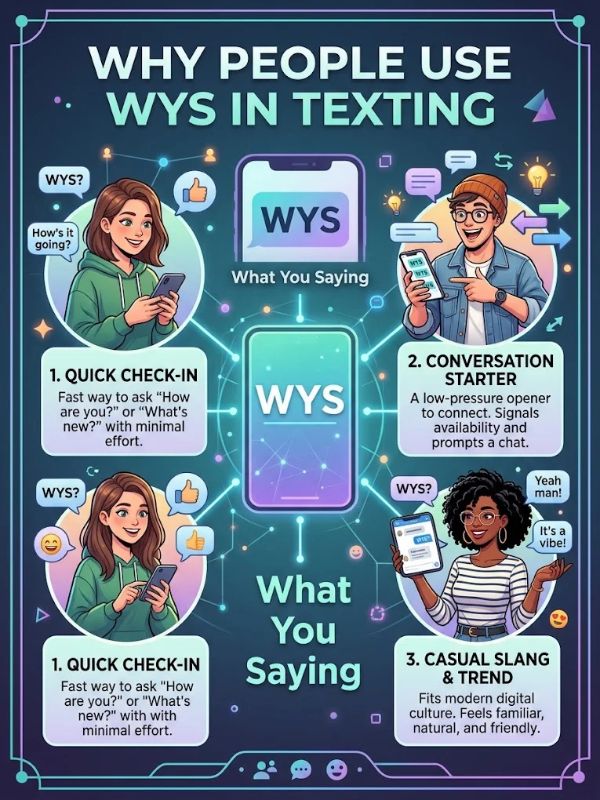
People love short words. Typing on a phone takes time, so slang grows from the need for speed. “Wys” cuts three words into three letters. There is also a social reason. Slang makes a chat feel relaxed. When you use shared short forms, you signal that you belong to the same group.
Here are the main reasons people choose “wys.”
- Speed: It saves time on small keyboards.
- Style: It sounds casual and modern.
- Emotion: It adds surprise or doubt without long sentences.
- Group identity: It matches the way friends talk.
- Flow: It keeps a chat moving without effort.
Many people also use it because it feels less formal than “I don’t understand.” The short form softens the question in friendly chats.
Understanding WYS Based on Context
Context tells you everything. The same three letters can mean different things in different chats. Always check four clues.
- The message before it. What did the other person just say?
- Punctuation. Question marks usually show surprise. A period can feel firm.
- Emojis. A laughing face points to humor. No emoji may point to seriousness.
- Your relationship. Friends tease. Strangers may mean it literally.
Here is an example of how context changes meaning.
| Message | Likely Meaning |
| “wys??? 😂” | Shocked and amused |
| “wys.” | Firm, maybe annoyed |
| “wys, tell me more” | Curious and friendly |
| “wys? can’t hear you” | Needs a repeat |
If you still feel lost, reply with a simple question. Try “Do you want me to explain?” This clears things up fast and avoids a fight.
Best Time to Use WYS in Texting
Slang works best in the right moment. “Wys” fits chats where people already speak in a relaxed way. Use it when the mood is light.
Good times to use it include these.
- You are chatting with close friends.
- Someone shares surprising news.
- A message is unclear and you want a quick repeat.
- You want to tease a friend in a playful way.
- You are in a gaming chat where speed matters.
Avoid it when the topic is serious or emotional. If a friend shares sad news, a short “wys” can feel cold. Choose kind, clear words instead. A good rule is this: if you would not shrug and say “what?” out loud in that moment, do not type “wys.”
WYS vs Other Similar Slang
Many text terms look alike. People mix them up all the time. This table helps you tell them apart.
| Slang | Full Form | Main Use |
| WYS | What you saying? | Clarify or react |
| WYD | What you doing? | Ask about current activity |
| WYM | What you mean? | Ask for explanation |
| WYA | Where you at? | Ask for location |
| HBU | How about you? | Return a question |
| SMH | Shaking my head | Show disapproval |
The biggest mix up is between “wys” and “wyd.” The letters “s” and “d” sit next to each other on a keyboard. Sometimes a person types “wys” by mistake when they meant “wyd.”
If a stranger sends “wys” at the start of a chat, they may mean “wyd.” Look at the flow. If there is no earlier message to question, the typo is likely. “Wym” and “wys” are close in meaning. Both ask for clarity. “Wys” often carries more surprise, while “wym” feels more neutral.
Psychological Effect of Using WYS
Short slang changes how a message feels. “Wys” can create different emotions depending on tone. Understanding this helps you avoid conflict. For the sender, the word feels fast and natural. It lets them react without thinking too hard. That can feel freeing in a quick chat.

For the receiver, the effect can vary. A friendly “wys” may feel warm and playful. A blunt “wys” may feel like criticism or judgment. Text strips away voice and face, so the reader fills in the mood.
Here are the common emotional effects.
- Curiosity: The sender wants to know more.
- Surprise: The message shocked them.
- Doubt: They question what you said.
- Pressure: The receiver feels asked to explain.
Because of this, think about your reader. A friendly extra word or emoji can soften the effect a lot.
Cultural Importance of WYS
Slang grows out of culture. Texting terms spread through music, social media, and gaming. “Wys” belongs to a wider style of short, spoken English that people carry into their chats. The phrase “what you saying” comes from casual speech. Many communities drop “are” when they talk.
Texting copies that rhythm, so “wys” feels natural to those who speak that way. Young people across many countries now use the same short forms. Online spaces blur borders. A teen in one country may use the same slang as a teen thousands of miles away.
How WYS Helps Increase Engagement
Short questions keep chats alive. “Wys” invites a reply. The other person usually answers with more detail, which grows the conversation.
On social media, this matters even more. A reply like “wys” under a post can spark a thread. People respond, explain, joke, or disagree. That activity boosts comments and reach.
Here is how it helps.
- It prompts the other person to explain.
- It adds energy to a flat chat.
- It shows you are paying attention.
- It builds a casual, friendly tone.
Content creators can use this idea too. A post that makes people say “wys” tends to trigger discussion. Surprising claims and bold opinions often get this reaction. Just stay honest and respectful.
Different Ways to Reply to WYS in Text
Your reply depends on the tone you read. First decide whether the sender is curious, confused, or challenging you. Then answer in a way that fits.
Here are the main reply styles.
- Explain: Give a short, clear repeat of your point.
- Joke: Match a playful tone with humor.
- Clarify: Ask what part confused them.
- Hold your ground: Stay calm if they challenge you.
A simple structure works well. First, show you heard them. Second, give the answer. Third, ask a friendly follow up if needed.
Example:
Them: wys?
You: I said I’m moving next month. Sorry, that was sudden! Want details?
This reply is clear, polite, and open. It keeps the chat positive.
Common Variations of WYS in Texting
Slang changes shape as people type it. You may see several forms of “wys.”
| Variation | Meaning |
| wys | What you saying? |
| wyss | Same, with extra emphasis |
| wys?? | Strong surprise |
| WYS | Louder or more shocked |
| wys bro / wys man | Casual address to a friend |
| wtf you saying | Stronger, more annoyed form |
| wat you saying | Longer, relaxed spelling |
| wut u sayin | Informal speech spelling |
Extra letters and punctuation add feeling. The more question marks, the more shocked the sender sounds. Capital letters often show loud emotion, like surprise or anger. Some people also combine it with emojis. A skull, a crying laugh face, or a raised eyebrow all change the mood. Always read these small signals together.
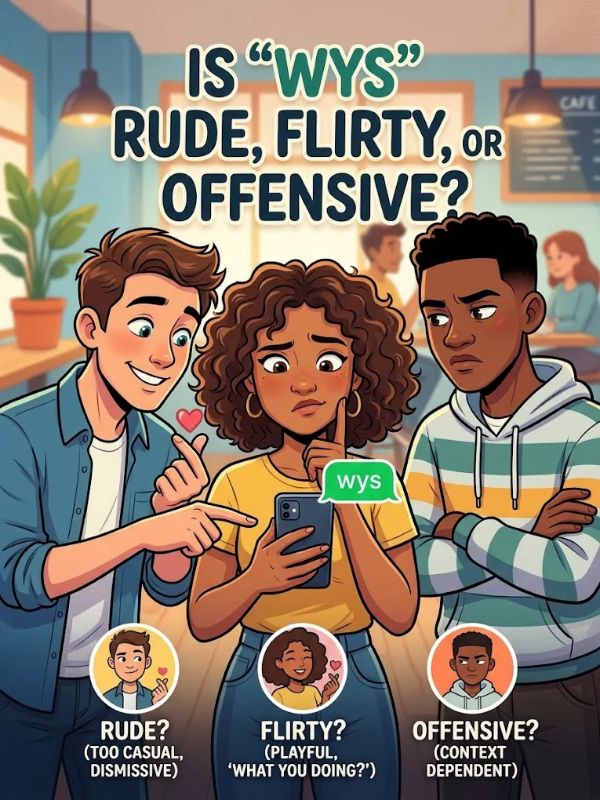
Is “wys” Rude, Flirty, or Offensive?
“Wys” is not rude by default. It is a neutral phrase that changes with tone. Let us look at the four main moods.
Neutral Meaning
In its basic form, “wys” is neutral. It simply asks what someone said. No judgment is attached. If a friend sends “wys, I didn’t catch that,” it is plain and harmless. Most daily uses fall into this group.
Slightly Rude Tone
Sometimes “wys” feels sharp. A short, cold reply with no emoji can sound dismissive. A period at the end can make it feel harsh. Think of the difference between “wys?” and “wys.” The first is open. The second may feel like a warning.
Friendly Tone
Among friends, “wys” is warm. People use it to show excitement or tease each other. Laughing emojis and extra letters make it feel kind. A friendly “wysss 😂” tells you the sender enjoys the chat. It shows closeness, not conflict.
Flirty Use
On dating apps, “wys” can feel playful or flirty. A sender may use it to tease a match and keep things light.
Match: I might be the best cook you’ll ever meet.
You: wys 😏 prove it.
The emoji and the challenge create a flirty mood. Without such clues, the word is not flirty on its own.
How to Respond When Someone Says “wys”
Pick your reply based on who you talk to and how the message feels. Here are good options for each case.
Casual Replies
Use these with friends and family.
- “I said I’m going out tonight.”
- “Just saying I’m tired lol.”
- “Nothing much, just surprised too.”
- “Let me explain.”
These keep the tone relaxed. They answer the question without stress.
Funny Replies
Humor works when the sender is playful.
- “Exactly what I said 😂”
- “Even I’m confused right now.”
- “You heard me right.”
- “I speak only facts.”
Use humor only when the mood is light. If the sender seems upset, skip the jokes.
Neutral Replies
Choose neutral replies with acquaintances or new contacts.
- “I meant what I wrote. Should I explain more?”
- “Sorry for the confusion. Here is what I meant.”
- “Let me say that again.”
These replies stay calm and polite. They avoid taking sides in a tense chat.
Professional Replies
If a coworker or client uses “wys,” answer in clear, full sentences.
- “Thank you for asking. Let me clarify.”
- “I would be happy to explain that point.”
- “Here is a quick summary of what I meant.”
Do not copy their slang in a work setting. Clear language shows respect and avoids confusion.
Common Misunderstandings About “wys”
Many people guess wrong about slang. Here are four common mistakes and the truth behind each.
Wrong Assumption 1: It Is an Insult
“Wys” is not an insult. It is a question or a reaction. It only feels rude when the tone is cold. Look at the full chat before you decide.
Wrong Assumption 2: It Has Only One Meaning
Slang is flexible. “Wys” can mean “what you saying,” “what you say,” or show doubt. The situation shapes the meaning. Treat it as a flexible tool, not a fixed code.
Wrong Assumption 3: It Is Formal English
It is not formal at all. It belongs to casual talk. Never use it in business writing, school papers, or official messages.
Wrong Assumption 4: It Always Means Anger
Many people assume short slang means the sender is mad. That is often untrue. Most of the time, they are just surprised, curious, or in a hurry. Look at emojis and punctuation for clues.
Similar Slang Terms You Should Know
Learning related terms helps you read chats with confidence. Here are some common ones you will see beside “wys.”
| Term | Meaning | Example |
| WYD | What you doing? | “wyd tonight?” |
| WYM | What you mean? | “wym you can’t come?” |
| WYA | Where you at? | “wya? We’re waiting.” |
| WDYM | What do you mean? | “wdym it’s cancelled?” |
| IDK | I don’t know | “idk what happened” |
| IKR | I know, right? | “ikr, so strange” |
| TBH | To be honest | “tbh I liked it” |
| NGL | Not gonna lie | “ngl that was funny” |
| FR | For real | “fr, I’m serious” |
| SMH | Shaking my head | “smh, unbelievable” |
Each of these short forms saves time. They also add personality to chats. Learn a few at a time and use them only where they fit.
When You Should Avoid Using “wys”
Slang is fun, but it is not right for every moment. Here are three situations where you should skip it.
Professional Settings
Work messages need clarity. “Wys” can look lazy or unclear. Your boss, teacher, or client may not understand it at all. Use full sentences like “Could you explain that again?” They show care and respect.
Cross Cultural Chats
Slang does not travel well. People from different regions or language backgrounds may not know the term. They may read it as a typo or feel confused. When you talk with a global audience, pick plain English. Clear words build trust and prevent misunderstanding.
Sensitive Situations
Never use short slang when someone shares grief, fear, or pain. A quick “wys” may sound careless and cold. Choose gentle words instead. A message like “I’m sorry, can you tell me more?” shows real care.
Frequently Asked Questions
What does wys mean in text?
“Wys” means “what you saying?” It asks someone to explain or repeat what they said. It can also show surprise.
Is wys the same as wyd?
No. “Wys” asks “what you saying,” while “wyd” asks “what you doing.” The two look alike, so people sometimes mix them up by typing error.
Is wys rude?
Not by default. It is a casual question. It may feel rude if the tone is cold or sharp, so check context.
How do I reply to wys?
Explain your point in a short, clear way. Match the tone of the sender. Use humor only if the chat feels playful.
Can I use wys at work?
It is best to avoid it. Work chat needs clear, polite language. Write “Could you clarify?” instead.
Does wys mean “what you say”?
Yes, sometimes. In that case it asks for your opinion or answer. The plan or topic in the chat will show which meaning applies.
Is wys popular on social media?
Yes. People use it on Instagram, Snapchat, TikTok, X, and Discord. It appears in DMs, replies, and comments to show surprise or ask for clarity.
Final Thoughts
“Wys” is a small word with a simple core meaning: “what you saying?” It helps people ask questions, show surprise, or challenge a statement. The tone changes with context, emojis, and punctuation.
Use it with friends, in gaming chats, and in relaxed social posts. Skip it at work, in serious talks, and with people who may not know slang. Read the mood first, then choose your words with care.