
You see “ATP” in a chat and stop for a second. What does it mean? Is it funny, serious, or just tired? Many people ask this question every day. The short answer is simple. In text slang, ATP means “at this point.”
This guide explains the ATP meaning in chat, texting, and social media in 2026. You will learn how people use it on WhatsApp, Instagram, and TikTok. You will also see real examples, easy replies, and tips on when to avoid it. Let’s get started.
ATP Meaning in Text Slang: Quick Meaning
ATP means “at this point.” People type it to say that, given everything so far, a certain result is now clear. It works as a short reaction to a long story.
Here is the quick view:
- Full form: At this point
- Type: Texting abbreviation and internet slang
- Tone: Casual, often tired, sarcastic, or playful
- Common spots: WhatsApp, Instagram, TikTok, Snapchat, X, and group chats
- Best use: Friends, memes, and light talk
The phrase pairs well with a result. For example, “ATP I’m just going to sleep” means “Given how things stand, I will sleep now.”
What Does ATP Mean in Texting?
In texting, ATP is a shortcut. It saves time and keeps the chat fast. Instead of writing “at this point,” people type three letters. The term often sits at the start of a sentence. It sets up a conclusion.
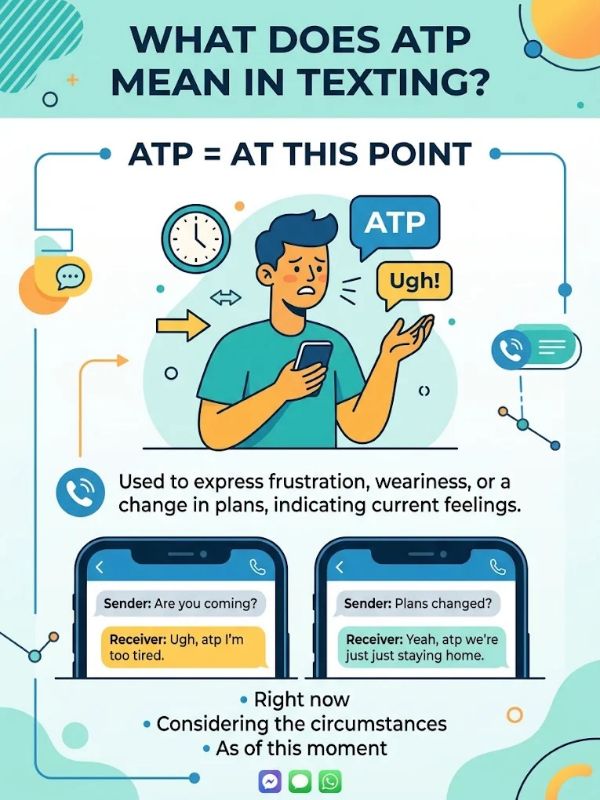
“ATP we should just order pizza” tells the reader that the group has tried other plans and pizza is the plan now. It can also stand alone as a reply. A friend sends a long story about a bad day. You reply “ATP 😭” and your friend knows you feel the pain with them.
What Does ATP Mean in Text? (Quick Answer)
ATP means “at this point.” People use it in text chats to show a conclusion, a decision, or a feeling of being fed up after a series of events.
Short examples:
- “ATP I don’t even care anymore.”
- “ATP it’s easier to walk.”
- “ATP he owes me a coffee.”
How to Reply When Someone Says ATP
Your reply depends on the mood. First, read the message around ATP. Check the emoji, the story, and the person’s usual style. Then pick a reply that fits. A good reply shows you understand the feeling. You do not need a long answer. A short, kind or funny line works well.
Casual Replies
Casual replies keep the chat light and quick. Use them with friends and family.
- “Yeah, same.”
- “Fair enough.”
- “Honestly, ATP me too.”
- “Makes sense.”
Funny Replies
Funny replies match a joking mood. Use them when the message came with laughing emojis.
- “ATP we deserve a trophy.”
- “ATP the group chat needs therapy.”
- “ATP just blame Mercury.”
- “ATP I’m adding it to my résumé.”
Mature Replies
Mature replies suit a serious or tired message. They show care and calm.
- “That sounds like a lot. Do you want to talk?”
- “I get why you feel that way.”
- “Maybe take a break and decide later.”
Respectful Replies
Respectful replies work when you do not know the person well. They also fit group chats with mixed ages.
- “Understood. Thanks for sharing.”
- “Got it. Let me know how I can help.”
- “That’s fair. We can look at other options.”
ATP Meaning by Platform
ATP shows up almost everywhere, but each app gives it a slightly different feel. The table below shows the usual tone on each platform.
| Platform | Common Use | Typical Tone |
| Group chats and family talk | Casual and warm | |
| DMs, captions, and story replies | Playful and trendy | |
| TikTok | Comments and video captions | Funny and sarcastic |
| Snapchat | Quick chats and snaps | Fast and relaxed |
| X (Twitter) | Posts and replies | Witty and blunt |
| Discord | Gaming and community chats | Joking and tired |
| Text messages | Friends and partners | Personal and direct |
The meaning stays the same on every app. Only the mood changes.
When to Use ATP (and When to Avoid It)
Use ATP when the chat is relaxed. It fits jokes, small complaints, and quick decisions. It works best with people who know slang.
Good times to use it:
- You chat with close friends.
- You joke about a funny problem.
- You want to wrap up a plan fast.
- You post a meme caption.
Avoid ATP when you need to sound clear and polite. The term can feel cold or dismissive. Some readers may not know it at all.
Avoid it in these cases:
- You write to a boss, teacher, or client.
- You talk about a serious problem or a hard feeling.
- You chat with someone who may not know slang.
- You deal with a conflict where tone matters.
Cultural Sensitivity
Slang does not travel evenly. A phrase that feels normal in one country may confuse readers in another. Many non native English speakers learn full phrases first and abbreviations later. If your chat includes people from different regions, write “at this point” in full. It costs a few seconds and prevents confusion. It also shows respect for every reader.
High Stakes Situations
Never use ATP when the stakes are high. Health talks, money talks, legal talks, and breakup talks need clear words. A short slang phrase can sound like you do not care. For example, “ATP it doesn’t matter” in a serious fight can hurt. A full sentence like “I feel tired of this argument, and I need time” is far kinder.
Situations That May Cause Misunderstanding
ATP can look like giving up, even when you mean it as a joke. Without a voice or a face, readers guess the tone. Add an emoji or a short note if the meaning could go wrong.
Also remember that ATP has other meanings outside texting. In science, ATP means adenosine triphosphate, a molecule that stores energy in cells. In sports, ATP often points to the Association of Tennis Professionals. Context tells you which meaning is correct.
Origin & Background
Texting abbreviations began in the days of short message limits. People had only 160 characters, so they cut words down. Terms like “BRB,” “LOL,” and “IDK” grew from that need. ATP follows the same path. It turns a common spoken phrase into a tiny written form. The phrase “at this point” has long been part of everyday English. Social media simply gave it a three letter shape.
Where Did ATP Come From?
No single person created ATP slang. It grew slowly from chat rooms, forums, and early social networks. Users shortened the phrase to type faster and sound casual. Its use rose with fast moving apps. Short comments on TikTok, X, and Instagram pushed people to write less.
ATP fit well in that space. Many slang terms spread through memes and viral videos. ATP did the same. A funny caption with ATP in it would reach thousands of people, and many of them copied the style.
Cultural Influence
ATP reflects a wider habit in online culture. People like short, relatable phrases that sum up a mood. A few letters can say “I’m tired, I’m done, and I’m laughing about it.” The term also suits dark humor and relatable humor. Gen Z creators often use it to joke about daily stress, school, work, and relationships. This shared style helps people feel seen.
Social Media Impact
Social media made ATP common. Trends, reels, and video captions use it to set up a punchline. Viewers read “ATP” and know a funny conclusion is coming. Comment sections also helped. A reader can type “ATP same” under a video and join the joke at once. That quick sharing builds a sense of community. Hashtags and sounds on short video apps spread the phrase further. Each new trend gave ATP a fresh audience.
How Its Meaning Evolved
At first, ATP simply meant “at this point” in a plain sense. It marked a point in time or a stage in a process. Over the years, the tone shifted. Today ATP often carries emotion. It can signal tiredness, humor, acceptance, or mild frustration. The core meaning stays the same, but the feeling around it has grown richer. This shift shows how slang works. A neutral phrase gains mood when many people use it the same way.
Real Life Conversations
Examples help most. Below are sample chats that show how ATP sounds in real use. Each one is short and clear.
WhatsApp Conversation
Sara: Did you finish the group project?
Ali: Not yet. The others haven’t sent anything.
Sara: ATP I’ll just do their parts too.
Ali: Bro, ATP we should add your name three times 😂
Sara: Honestly, yes.
Here ATP shows Sara has given up waiting. The tone is tired but light.
Instagram DMs
Maya: Your story about the rain was so funny.
Zoya: I forgot my umbrella again.
Maya: ATP the umbrella forgot you 😭
Zoya: I’m buying five of them tomorrow.
ATP helps Maya make a joke. It fits the playful style of Instagram.
TikTok Comments
A video shows someone burning toast for the third time.
Comment 1: ATP just buy bread from the bakery
Comment 2: ATP the toaster is the problem
Comment 3: ATP it’s a personality trait
Each comment uses ATP to add a quick joke. This pattern is common on short video apps.
Text Messages
Hamza: The train is late again.
Bilal: ATP I should just move next to the station.
Hamza: ATP we should buy the train.
Bilal: Deal 😂
The mood is simple and funny. Both friends feel the same frustration.
Emotional & Psychological Meaning

ATP is short, but it holds feeling. Readers sense the mood from small clues. Emojis, punctuation, and the story itself shape the meaning. The term often works as a quiet emotional release. It lets people share stress without a long speech. That is part of its charm.
What Emotion Does ATP Express?
ATP can express many emotions. The most common are:
- Tiredness: “ATP I need a nap.”
- Humor: “ATP I’m the main character of chaos.”
- Acceptance: “ATP it is what it is.”
- Mild frustration: “ATP nothing surprises me.”
- Determination: “ATP I might as well try.”
Context decides which emotion fits. A smiling emoji points to humor. A flat message may point to tiredness.
Why Do People Use It?
People use ATP for three main reasons. It saves time, it adds style, and it softens heavy feelings. A joke with ATP in it feels lighter than a long complaint. It also builds connection. When friends share the same slang, they feel closer.
ATP becomes part of a private language. Finally, it gives people control. After a messy event, ATP lets them draw a line and move on.
What It Reveals About Modern Communication
ATP shows how fast modern talk has become. People send many short messages in a day. They want to share mood and meaning in seconds. It also shows how people mix humor with stress. Many users joke about hard topics to cope. ATP is one tool for that habit. At the same time, it reminds us that short words can leave gaps. Tone can get lost. Good communicators know when to add more detail.
A Personal Style Scenario
Imagine a student named Noor. She studies all week for an exam. On the day, the power goes out, and her laptop dies. She texts her friend: “ATP the universe just wants me to fail 😭.” Her friend replies. “ATP bring snacks and we’ll study by candlelight.” In two short lines, Noor shares her stress, and her friend offers comfort. That is the quiet power of ATP.
Usage in Different Contexts
ATP changes flavor with the setting. A joke among friends can sound rude at work. Knowing the setting helps you choose well.
Social Media
On social media, ATP is common and welcome. It fits captions, comments, and replies. Creators use it to hook viewers with a relatable line.
Example captions:
- “ATP my phone battery is a myth.”
- “ATP I live on coffee and hope.”
- “ATP Monday is my enemy.”
Keep your tone friendly. Social media readers enjoy humor but dislike harsh posts.
Friends and Relationships
Among friends, ATP feels natural. It makes the chat feel real and relaxed. Friends often use it to joke about shared problems. In romantic chats, take more care. “ATP I don’t know what to do” can sound sad or distant. Add a kind note if you want your partner to feel safe. For family chats, keep it simple. Older relatives may not know the term, so explain it if they ask.
Work and Professional Settings
At work, clear writing wins. ATP may confuse readers or sound too casual. Use full words in emails, reports, and messages to managers. A relaxed team chat may allow it. Even then, read the room first. If your team uses slang often, a light ATP is fine. A safe rule is simple. If you would not say “at this point” out loud in a meeting, do not shorten it in writing.
Casual vs Serious Tone
ATP leans casual. It matches jokes, memes, and everyday talk. It does not match solemn topics.
Compare these lines:
| Casual Use | Serious Use (Better Written in Full) |
| “ATP pizza sounds perfect.” | “At this point, we need to review the budget.” |
| “ATP I’m just vibing.” | “At this point, I need more support.” |
| “ATP the bus is faster.” | “At this point, the delay affects our plan.” |
Pick the form that fits the weight of the topic.
Common Misunderstandings
Slang can trick readers. ATP seems simple, yet people still mix it up. Here are the most common errors.
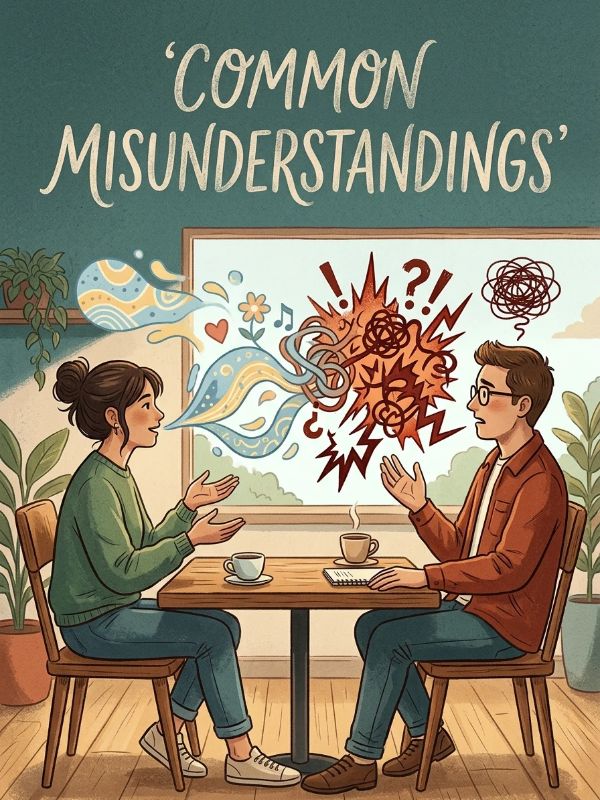
People Think ATP Always Means One Thing
ATP has more than one meaning across the world. In chat it means “at this point.” In biology it means adenosine triphosphate. In sports it can mean the tennis tour. Always check the setting. A message about exams and cells likely means the science term. A message about a bad day likely means the slang.
Tone Confusion
Readers sometimes take ATP as angry. In reality, it is often playful. Without a voice, the tone can slip. An emoji helps. “ATP 😂” feels light, while “ATP.” can feel flat or cold. Notice punctuation too, because a period can change the mood.
Literal vs Figurative Meaning
ATP can be literal or figurative. “ATP it’s 5 PM” points to a real time. “ATP I might as well move to the moon” is a joke. Figurative use is more common in slang. Readers should not take it word for word. The humor lives in the exaggeration.
Assuming Everyone Understands It
Not everyone knows internet slang. Older adults, new English learners, and some professionals may miss it. Assuming they know can cause awkward moments. If you are unsure, spell it out. Clear words never hurt. You can still keep a friendly tone.
Comparison Table
ATP looks like other slang terms, so people mix them up. This table sets them side by side.
| Term | Meaning | Tone | Example |
| ATP | At this point | Tired or funny | “ATP I’m just napping.” |
| IDK | I don’t know | Neutral | “IDK what to cook.” |
| IMO | In my opinion | Soft and polite | “IMO the movie was good.” |
| TBH | To be honest | Frank | “TBH I’m exhausted.” |
| SMH | Shaking my head | Disappointed | “SMH he did it again.” |
| FR | For real | Agreeing | “FR that was wild.” |
Key Insight
ATP is a conclusion word. It does not ask a question or give an opinion. It states where things stand and often adds a mood. That small difference sets it apart. Remember it, and you will use it with confidence.
Variations / Types
ATP appears in many short phrases. Each one adds its own flavor. Below are the most popular types.
ATP – At This Point
This is the base form. It simply means “at this point.” It marks the current stage of a situation.
Example: “ATP the movie should be starting.” It is neutral and clear.
ATP Honestly
This version adds frankness. The speaker shares a true feeling.
Example: “ATP honestly I prefer staying home.” It sounds open and calm.
ATP Though
This form adds contrast. It points to a surprising result.
Example: “ATP though, I’m impressed he even tried.” It mixes humor with praise.
ATP I’m Done
This version shows strong tiredness. The speaker feels finished with a task or a problem.
Example: “ATP I’m done with this assignment.” Use it with people who know you well.
ATP Let’s Move On
This phrase suggests a fresh start. It tells the group to stop dwelling on the past.
Example: “ATP let’s move on and plan the trip.” It feels practical and positive.
ATP Who Cares
This form sounds careless or bold. It can feel rude, so use it with care.
Example: “ATP who cares about the score?” Tone matters a lot here.
ATP It Doesn’t Matter
This version shows acceptance or surrender. The speaker lets go of the worry.
Example: “ATP it doesn’t matter, we can try again.” It can sound calm or sad.
ATP We Tried
This phrase means the group made an effort and will accept the result. It carries humor and a bit of pride.
Example: “ATP we tried, and the cake is still flat.” It often brings a laugh.
ATP Just Laugh
This form turns stress into a joke. The speaker chooses humor over worry.
Example: “ATP just laugh, the Wi-Fi is gone again.” It keeps spirits up.
ATP What Else Can We Do?
This version asks for ideas after other choices have failed. It sounds hopeful.
Example: “ATP what else can we do? Let’s ask for help.” It invites teamwork.
Regional & Cultural Usage
Slang travels fast, yet each region adds its own twist. ATP is global, but its popularity and style vary.
Western Culture
In the United States, the United Kingdom, Canada, and Australia, ATP is common among teens and young adults. It appears in humor, memes, and daily chats. Many people treat it as a normal part of casual talk.
Asian Culture
In Asia, English slang blends with local languages. Young people in places like India, Pakistan, the Philippines, and Malaysia often use ATP in mixed language chats. A sentence may begin in English and end in a local language, with ATP in the middle. Many users learn it through short video apps and gaming. Its use grows each year.
Middle Eastern Culture
In the Middle East, English slang often mixes with Arabic, Persian, or Turkish in chats. Young users know ATP from social media and gaming communities. They use it in jokes and reactions, mostly in informal spaces. Formal talk still favors full phrases and respectful language.
Global Internet Usage
Online, borders matter less. A meme made in one country can spread worldwide in a day. ATP moves the same way. This global spread makes ATP a shared code. People from different places can joke in the same short language. Still, clear writing remains wise for mixed groups.
Gen Z vs Millennials
Both groups know ATP, but they use it differently. Gen Z leans on it for humor and mood. Millennials often use it in plain, practical ways.
| Group | Style of Use | Example |
| Gen Z | Funny, ironic, emotional | “ATP my sleep schedule is fiction.” |
| Millennials | Practical, light sarcasm | “ATP let’s just meet halfway.” |
Gen Z also mixes ATP with emojis and memes. Millennials may write it in complete sentences. Both styles are valid, and each fits its own crowd.
Is It Safe for Kids?
Yes, ATP is safe for kids. The term itself is clean and has no harmful meaning. It simply means “at this point.” Still, parents should look at the context. The words around ATP matter more than the term. A child may use ATP in a rude sentence or a joke that hurts someone.
Parents can help in simple ways:
- Explain what the slang means.
- Talk about tone and kindness online.
- Encourage clear words when a topic is serious.
- Stay open to questions about other slang.
Understanding the Context
Context is the key to every slang term. Look at the story, the speaker, and the platform. These clues reveal the mood behind ATP.
Ask yourself a few questions:
- Who sent the message?
- What happened before it?
- Which emoji or punctuation came with it?
- Is the setting casual or serious?
If you still feel unsure, ask. A quick “Do you mean at this point?” clears things up. Good communication beats guessing every time.
Frequently Asked Questions
What does ATP mean in text?
ATP means “at this point.” People use it to show a conclusion or a mood after a series of events.
Is ATP slang rude?
No, ATP is not rude by itself. The tone around it decides whether it feels friendly or harsh.
How do you use ATP in a sentence?
Place it at the start of a sentence to show a result. For example, “ATP I’m just going to stay home.”
Can I use ATP at work?
Avoid it in formal messages. Use “at this point” in full for emails, reports, and talks with managers.
What does ATP mean in biology and sports?
In biology, ATP means adenosine triphosphate, the energy molecule in cells. In sports, it often means the Association of Tennis Professionals.
Is ATP the same as IDK or TBH?
No, they are different. IDK means “I don’t know,” TBH means “to be honest,” and ATP means “at this point.”
Do Gen Z and Millennials both use ATP?
Yes, both groups use it. Gen Z uses it more for humor and mood, while Millennials use it in practical ways.
Final Thoughts
ATP is a small term with a clear meaning. It stands for “at this point” and helps people sum up a situation in seconds. Its tone can be funny, tired, calm, or blunt. Use it with friends and on social media. Write the full phrase in serious and professional talk. With the right context, ATP is easy to read, easy to use, and easy to answer.