

Ever seen “TF” in a text and wondered what it means? You are not alone. This short slang term shows up everywhere, from group chats to Instagram comments. Most people use it to react fast when something feels shocking, confusing, or just plain annoying. Once you understand it, you will spot it everywhere and know exactly how to reply.
In this guide, we break down the true TF meaning in simple words. You will learn how people use it in real texts, social media, and even different fields like finance and gaming. By the end, you will feel confident reading and using TF the right way in any conversation.
What Does TF Mean?
TF is a short slang term used in texting and online chat. In most cases, TF stands for “the f***,” which is a shortened version of a common curse word. People add TF to a sentence to boost emotion, show shock, or add extra punch to a question.
TF rarely stands alone as a full sentence. Instead, people slot it into a question or statement to make it feel more intense. It works like a seasoning. A little bit of TF changes the whole flavor of a message.
TF = “The F***”
The most common meaning of TF is “the f***.” This phrase is a filler that replaces a stronger curse word while still carrying the same energy. Instead of typing the full swear word, people use the letter F to keep the message a little less harsh while still getting the point across.
For example:
- “What TF is going on here?”
- “Why TF would you do that?”
- “Who TF told you that?”
In each example, TF adds a jolt of emotion. The sentence would still make sense without it, but it would lose its punch.
TF as a Standalone Reaction
Sometimes TF shows up on its own, without a full sentence around it. People type just “TF” as a quick reaction to something surprising, confusing, or annoying. This short form works well in fast paced chats where typing a full sentence takes too much time.
For example, if a friend sends a strange photo, you might reply with just “TF?” This single word carries a full reaction. It says “I am confused and a little shocked” without needing more words.
Rare Alternate Meanings
While “the f***” is the most common meaning, TF also has a few other meanings in different fields. These meanings are less common in everyday texting but still worth knowing.
- In finance, TF can mean “transfer.”
- In accounting, TF sometimes stands for “trust fund” or “tax free.”
- In charts and technical analysis, TF often means “time frame.”
- In medical settings, TF can stand for “tube feeding.”
These meanings depend heavily on context. In a casual text from a friend, TF almost always means the slang version. In a work email or financial report, it likely means something else entirely.
How TF Is Used in Texting
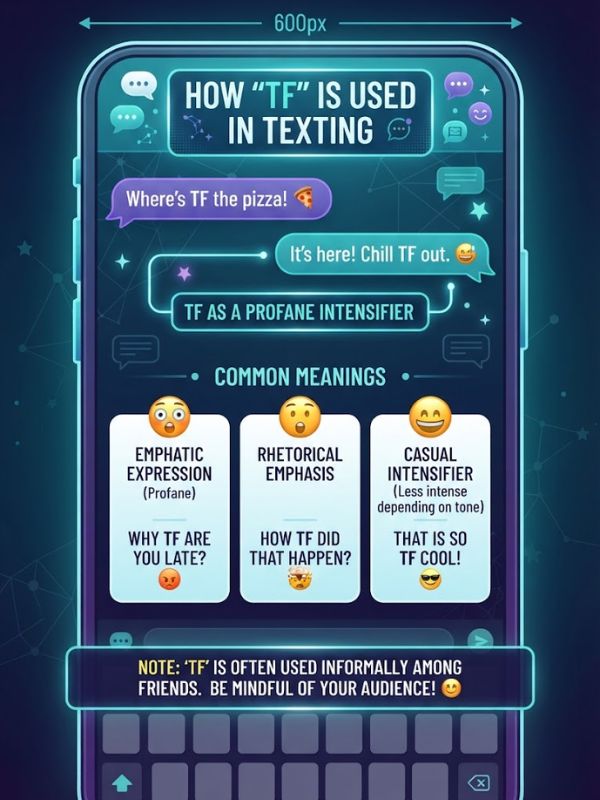
TF shows up in many different tones and situations. The letters stay the same, but the meaning shifts based on how the message is written and who is sending it. Understanding these patterns helps you read the true emotion behind a message.
TF to Express Surprise
People often use TF when something catches them off guard. It works as a quick way to show shock without writing a long explanation.
Example texts:
- “Wait, TF? You got engaged?”
- “TF is that outside my window?”
These messages show genuine surprise. The sender is not necessarily angry, just caught off guard by unexpected news or a strange sight.
TF to Show Anger or Frustration
TF also works well when someone feels annoyed or upset. Adding TF to a sentence makes the frustration clear, even through text where tone of voice is missing.
Example texts:
- “TF do you think you’re doing?”
- “Why TF didn’t you tell me sooner?”
In these cases, the sender is clearly upset. TF adds weight to the frustration, almost like raising your voice while speaking.
TF to Express Confusion
Confusion is one of the most common reasons people use TF. It shows that the sender does not understand something and wants clarity right away.
Example texts:
- “TF does this even mean?”
- “How TF do I fix this error?”
This use of TF feels less aggressive and more genuinely puzzled. The sender wants an answer, not a fight.
TF in Questions
TF fits naturally into questions that start with words like what, why, how, who, and where. It boosts the emotional weight of the question while keeping the sentence short.
| Question Starter | Example With TF |
| What | What TF happened here? |
| Why | Why TF is this so hard? |
| How | How TF did you find this? |
| Who | Who TF said that? |
| Where | Where TF did you put my keys? |
This pattern makes TF one of the most flexible slang terms in texting. It slides into almost any question format.
TF in Group Chats
Group chats move fast, and TF fits perfectly into that fast paced style. Friends use it to react quickly to messages, memes, or drama without slowing down the conversation.
In a group chat, TF often appears as a one word reply to a message, photo, or video. It signals reaction without requiring a full explanation, which keeps the conversation moving smoothly.
TF in Social Media and Texting Platforms
TF shows up across nearly every messaging app and social media platform. Each platform has its own texting culture, but the core meaning of TF stays mostly the same everywhere.
TF on Snapchat
Snapchat conversations move quickly, and users often send short reactions to snaps. TF is common under funny, weird, or shocking snaps. A user might reply to a strange snap with just “tf” and a laughing emoji.
Because Snapchat messages disappear quickly, users tend to keep replies short. TF fits perfectly into this quick reply culture.
TF on Instagram
On Instagram, TF often appears in comments and direct messages. People comment “tf” under confusing posts, wild videos, or dramatic photos. It works as a quick way to react without writing a full comment. Instagram users also use TF in captions, especially when joking about a weird or funny moment from their day.
TF on WhatsApp
WhatsApp is often used for both casual chats and family group chats. TF shows up mostly in casual chats between friends rather than family groups, since the tone feels a bit too informal for most family conversations. In friend groups on WhatsApp, TF often appears in voice note transcripts, quick texts, and reactions to shared photos or videos.
TF on Twitter (X)
Twitter, now known as X, is full of short, punchy posts. TF fits naturally into this style. Users often post short reactions like “wait tf” or “why tf would they do that” in response to trending news or viral posts. Because tweets have limited space, TF helps users express strong reactions without using up valuable characters.
TF in Gaming Chats
Gamers use TF constantly during online matches. It shows up in voice chats, text chats, and post game messages. Players often type “tf just happened” after a surprising kill, win, or loss.
Gaming culture moves fast, and TF fits the quick, reactive style of chat during matches.
Tf meaning in money
In financial conversations, TF often stands for “transfer.” People use it when discussing bank transfers, money transfers, or fund transfers between accounts.
Example: “I sent the TF this morning, check your account.” Here, TF simply refers to a bank transfer, with no connection to slang at all.
Tf meaning in relationship
In relationship talk, TF usually keeps its slang meaning, but the emotional context often shifts toward romantic frustration or confusion. Friends often use TF when discussing dating drama or relationship confusion.
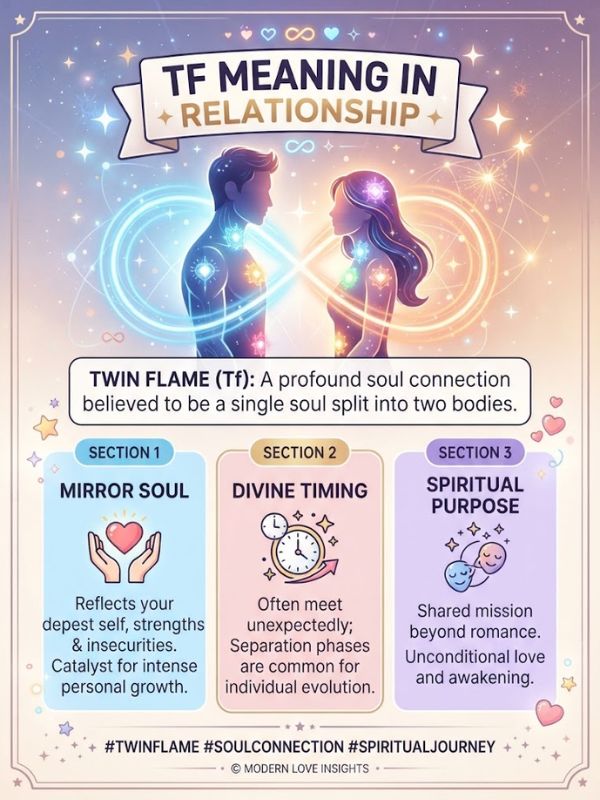
Example: “Why TF would he text his ex at midnight?” This shows frustration or disbelief about a partner’s behavior.
Tf meaning in accounting
In accounting, TF can stand for “trust fund” or occasionally “tax free,” depending on the document or region. Accountants and financial planners use these abbreviations in reports, spreadsheets, and client communication.
This meaning has nothing to do with texting slang and depends entirely on professional context.
Tf meaning in chart
In trading and technical analysis, TF usually means “time frame.” Traders discuss charts using different time frames, such as one hour, four hour, or daily charts.
Example: “Switch to a higher TF to see the trend clearly.” Here, TF refers purely to chart settings.
Tf meaning in business
In business settings, TF can stand for “task force,” a group formed to handle a specific project or problem. Companies often create a task force to solve urgent issues or manage big projects.
Example: “The TF will report findings by Friday.” This meaning is common in corporate emails and meetings.
Tf meaning medical
In medical settings, TF often stands for “tube feeding,” a method used to give nutrition to patients who cannot eat normally. Doctors and nurses use this abbreviation in patient charts and medical notes. This meaning is strictly professional and never overlaps with casual texting slang.
| Term | Meaning | Used For |
| TF | Tube Feeding | Giving nutrition through a feeding tube |
| TF | Transcription Factor | A protein that controls gene activity |
| TF | Tetralogy of Fallot | A congenital heart condition |
Tf meaning gender
In some online spaces, TF can stand for “transfeminine,” used within transgender communities to describe identity. This meaning appears mostly in identity focused conversations, forums, and social media bios. Context matters heavily here, since this meaning is very different from the casual slang version.
Tf meaning in gen z
Among Gen Z, TF almost always keeps its original slang meaning, but younger users often pair it with other trendy slang terms and emojis for extra emphasis. Gen Z texting style favors short, blunt reactions, which makes TF a natural fit.
Example: “Bro tf is this outfit 💀” This combines TF with modern slang and emoji for a fun, expressive reaction.
Why TF Is Popular in Texting

TF has become one of the most common slang terms in digital communication. Its popularity comes from a mix of convenience, emotional value, and cultural spread across platforms.
It Saves Time
Typing TF takes far less effort than typing out longer phrases. In fast paced conversations, speed matters, and short slang terms like TF help people react quickly.
It Softens Profanity Slightly
TF gives people a way to express strong emotion without typing the full curse word. It feels slightly less harsh while still carrying similar energy, which makes it useful in casual settings where full swearing might feel too strong.
It Adds Emotion
Text messages often lack tone, so slang terms like TF help fill that gap. Adding TF signals frustration, shock, or confusion clearly, even without punctuation or capital letters.
It’s Widely Understood
Almost everyone who uses texting apps understands TF. This wide recognition makes it a safe and effective way to communicate emotion across different age groups and platforms.
Benefits of Using TF
Using TF in the right context comes with a few clear benefits. These benefits explain why the term continues to spread across texting culture.
Adds Emphasis
TF makes a sentence feel stronger and more direct. It grabs attention and signals that the sender feels something intensely.
Expresses Authentic Emotion
Slang terms like TF often feel more genuine than formal language. They mimic how people actually speak, which makes conversations feel more natural and real.
Fits Casual Conversations
TF works especially well in casual chats between friends. It matches the relaxed, informal tone that most texting conversations naturally have.
TF in Digital Communication and Online Slang
TF is part of a much bigger world of internet slang. Just like LOL, OMG, and BRB became normal parts of texting, TF has earned its place as an everyday expression. Digital communication favors short, quick expressions that carry strong meaning. TF fits this style perfectly, since it takes only two letters to express a full wave of emotion.
As texting continues to shape modern language, terms like TF show how casual writing keeps evolving. Slang terms often start online and slowly move into everyday spoken conversation as well.
The Role of TF in Texting Etiquette
While TF is common, it is not always appropriate in every conversation. Knowing when to use it helps you avoid awkward or uncomfortable situations.
Relationship
The closeness of your relationship with the person matters a lot. TF feels natural between close friends but can feel rude or confusing when sent to someone you barely know.
Tone
Tone plays a huge role in how TF lands. The same word can feel playful with a laughing emoji or harsh without one. Always think about how your message might be read before sending it.
Professional Context
TF should almost never appear in professional messages, emails, or workplace chats. Even in casual work group chats, it can come across as unprofessional or disrespectful, so it is best avoided in these settings.
Popular Texting Acronyms and Slang Terms
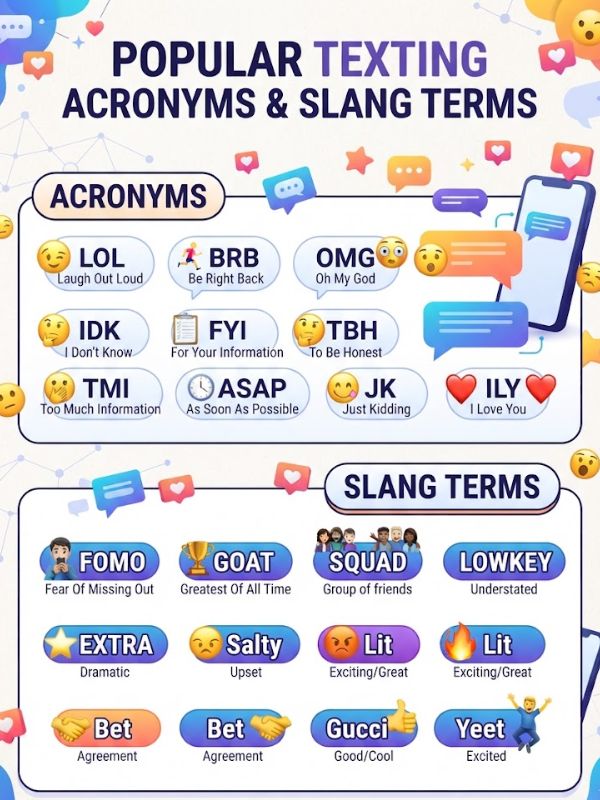
TF belongs to a large family of texting acronyms that people use every day. Here are some popular ones for comparison.
| Acronym | Meaning |
| TF | The f*** |
| WTF | What the f*** |
| LOL | Laugh out loud |
| OMG | Oh my god |
| BRB | Be right back |
| IDK | I don’t know |
| SMH | Shaking my head |
| FR | For real |
| NGL | Not gonna lie |
| TBH | To be honest |
Knowing these common terms helps you read texts faster and respond naturally in casual conversations.
Responding to TF
When someone sends you a message with TF, how you respond depends on the emotion behind it. Reading the context carefully helps you reply in the right tone.
If It Shows Confusion
If TF appears in a confused question, try to give a clear and helpful answer. A calm response works best here, since the sender genuinely wants clarity.
If It Shows Anger
If TF shows anger or frustration, stay calm in your reply. Acknowledge their feelings first before explaining your side of the story.
If It’s a Joke
Sometimes TF is used playfully, especially with emojis or funny context. In these cases, a light hearted reply works best, and you can match their playful energy.
If It Feels Aggressive
If a TF message feels overly aggressive or disrespectful, it is okay to address it directly. You can calmly ask the person to explain their tone or take a break from the conversation if needed.
Frequently Asked Questions
What does TF mean in a text message?
TF usually means “the f***,” a short slang term people use to express shock, anger, or confusion in a message.
Is TF a rude word to use in texting?
TF can feel casual or slightly rude depending on tone, but among friends it usually feels playful rather than offensive.
What does TF mean on Snapchat or Instagram?
On Snapchat and Instagram, TF keeps its slang meaning and usually shows a quick reaction to something surprising or funny.
Does TF always mean something negative?
No, TF often shows surprise or humor rather than anger, so the meaning depends heavily on the surrounding words and emojis.
What is the difference between TF and WTF?
WTF simply adds the word “what” before TF, and both phrases carry a similar meaning of surprise, anger, or confusion.
Can TF have a different meaning outside of texting?
Yes, TF can mean “transfer” in finance, “time frame” in trading, or “task force” in business, depending on the context.
Is it okay to use TF in professional messages?
No, TF should be avoided in professional emails or workplace chats since it can come across as unprofessional or disrespectful.
Final Thoughts
TF has become a normal part of everyday texting language. Whether someone uses it to show shock, frustration, or humor, this small slang term carries a lot of emotional weight in just two letters. Understanding its meaning helps you read messages more accurately and respond in a way that matches the sender’s tone.
As digital communication continues to grow, slang terms like TF will keep evolving alongside new platforms and trends. Learning how to use and understand TF puts you one step ahead in modern texting culture, helping you communicate naturally with friends, family, and online communities alike.