

Have you seen IMAO in a text or comment and wondered what it means? IMAO stands for “In My Arrogant Opinion.” People use it to share a bold or joking opinion. Some people also use it to mean laughing, close to LMAO. It shows up often in group chats, Snapchat, and social media comments.
This guide explains the full meaning of IMAO in simple words. You will learn how people use it in daily chats. You will also see real examples from texting and social media. By the end, you will know exactly when and how to use IMAO the right way.
What Does IMAO Mean in Text & Chat?
IMAO is a short chat term people use to react to something funny. It shows up in texts, group chats, and social media comments every day. People use it to laugh at a joke or a funny situation without typing a full sentence.
Chat slang like IMAO saves time. It also adds tone to a message that would otherwise sound flat. Most people learn it from friends, group chats, or social media comments, not from a dictionary.
Quick Definition
IMAO means “In My Arrogant Opinion.” Some people also use it to mean “laughing” like its cousin term LMAO. The exact meaning depends on the context of the chat.
Full Form, Stands For & Short Meaning of IMAO
IMAO stands for “In My Arrogant Opinion.” It is a playful twist on IMO, which means “In My Opinion.” Adding the word “arrogant” makes the phrase sound funny and sarcastic instead of serious.
Some users also treat IMAO as a stylized version of LMAO, which means “Laughing My Ass Off.” This second meaning is less common but still shows up in casual chats, especially among younger users.
Short Meaning
| Term | Full Form | Common Use |
| IMAO | In My Arrogant Opinion | Sharing a bold or joking opinion |
| IMAO | Laughing (LMAO style) | Reacting to something funny |
Origin, History & First Known Use of IMAO
IMAO started as a joke version of IMO. Early internet users on forums and chat rooms in the late 1990s and early 2000s liked to add humor to normal acronyms. Adding “arrogant” turned a plain opinion into a funny, self-aware statement.
The term grew popular on message boards, early social networks, and gaming chats. People used it when they wanted to sound confident but also poke fun at themselves. Over time, texting culture picked it up and spread it further.
By the time smartphones and apps like Snapchat and Instagram became popular, IMAO had two lives. One version kept the “arrogant opinion” meaning. The other blended into laughing reactions, close to LMAO. Both meanings still exist today.
How People Use IMAO in Daily Conversations
People use IMAO to keep chats light and fun. It works well when giving a joking opinion or reacting to something funny. The tone is casual, never formal.
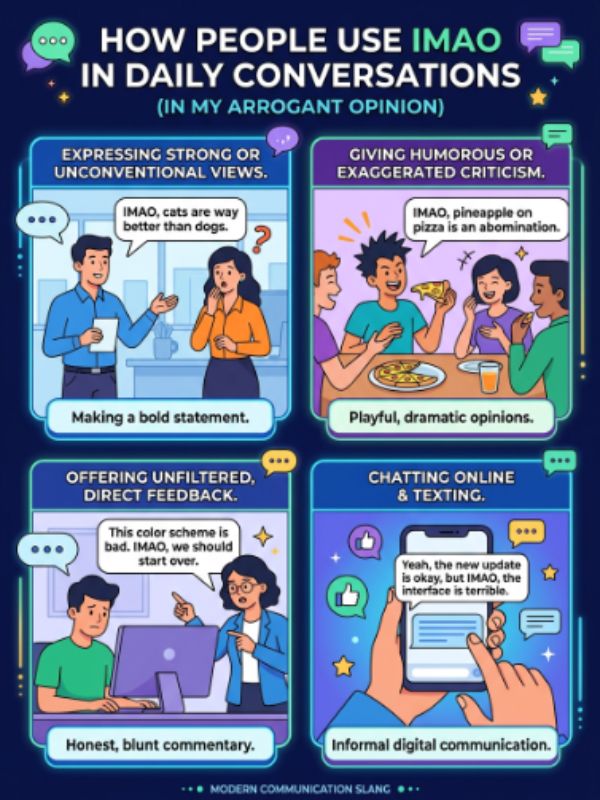
Most people do not think too hard before typing IMAO. It comes out naturally in fast texting, especially in group chats where jokes fly quickly.
Texting Examples
- “IMAO, pineapple belongs on pizza.”
- “That video was hilarious, IMAO.”
- “IMAO you should have seen his face.”
Social Media Usage
On social media, IMAO often appears in comments under funny posts, memes, or videos. People type it fast to react without writing a full sentence.
- Comment on a meme: “IMAO this is too real.”
- Reply to a joke tweet: “IMAO I can’t.”
Casual Situations
IMAO fits best in relaxed settings like:
- Group chats with friends
- Comment sections on funny posts
- Text messages between close contacts
- Gaming chats during funny moments
Is IMAO a Typo for LMAO?
Sometimes yes. Many people type IMAO by mistake when they mean LMAO. The letters I and L sit close on some keyboards, so the mix up happens often, especially on mobile phones.
Autocorrect can also cause this switch. Some phones do not recognize IMAO as a common word, so they may not fix it, which lets the “typo” stay in the message.
Even though it started as a possible typo, IMAO has grown into its own accepted slang term. Many young users now use it on purpose, not by accident.
Is IMAO an Acronym or Slang Term?
IMAO is both. It began as a true acronym for “In My Arrogant Opinion.” Over time, internet culture turned it into slang with a flexible meaning, similar to how LOL grew beyond its original use.
Slang terms often shift meaning as more people adopt them. IMAO followed this same path. It moved from formal chat rooms to everyday texting and social media captions.
What Tone Does IMAO Have?
IMAO carries a light, joking tone. It never sounds strict or serious. People use it to soften an opinion or to show they are laughing at something.
The tone can shift slightly based on context. It can sound:
- Playful
- Sarcastic
- Confident
- Amused
IMAO Examples in Different Tones
| Tone | Example |
| Playful | “IMAO cats are better than dogs.” |
| Sarcastic | “IMAO I’m always right, obviously.” |
| Confident | “IMAO this is the best show ever.” |
| Amused | “IMAO that fail video killed me.” |
Where Does IMAO Appear in a Sentence?
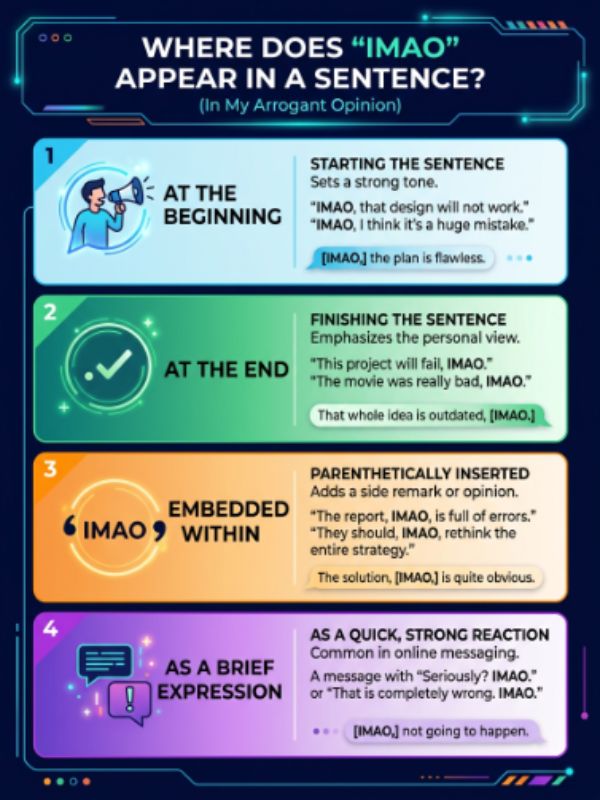
IMAO usually appears at the start or end of a sentence. It rarely sits in the middle because it works best as a quick tag, not a core part of the sentence structure.
- Start: “IMAO this movie is overrated.”
- End: “This movie is overrated, IMAO.”
Both placements sound natural in texting and chat apps.
Is IMAO Rude or Offensive?
IMAO is not rude on its own. It usually signals humor or a lighthearted opinion. The word “arrogant” is meant as a joke, not a real insult toward the reader.
Context still matters. If someone uses IMAO to mock a person directly, the tone can feel harsh. In most cases, though, it stays friendly and fun.
Can You Use IMAO at School or Work?
IMAO fits casual chats, not formal settings. School projects, work emails, and professional messages should avoid slang like IMAO. Teachers and managers may not understand the term or may see it as unprofessional.
It works fine in:
- Texts with friends
- Group chats with classmates
- Social media comments
- Casual gaming chats
It does not work well in:
- Emails to teachers or bosses
- Formal reports
- Professional presentations
- Business chat channels
IMAO vs. IMO, IMHO, and LMAO
These terms look similar but carry different shades of meaning. Understanding the difference helps avoid confusion in chats.
| Term | Meaning | Tone |
| IMO | In My Opinion | Neutral |
| IMHO | In My Humble Opinion | Polite, modest |
| IMAO | In My Arrogant Opinion | Joking, bold |
| LMAO | Laughing My Ass Off | Funny, laughing |
IMO stays neutral and works in many settings. IMHO adds humility. IMAO flips that humility into a joke. LMAO focuses only on laughter, not opinion.
Where Did IMAO Come From?
IMAO grew out of early internet forums where users loved wordplay. People often added twists to existing acronyms to sound funnier or more original. IMAO became a popular twist on IMO because it added personality to a plain phrase.
Gaming communities and early social platforms helped spread the term. As chat culture moved to phones and apps, IMAO followed the same path as many other classic internet acronyms.
IMAO Meaning Across WhatsApp, Instagram, TikTok & Snapchat
IMAO means the same core thing across platforms, but its use can shift slightly based on app culture.
On WhatsApp, IMAO shows up mostly in casual group chats between friends or family members who use internet slang often. It reacts to jokes or shares a bold opinion.
On Instagram, IMAO appears in comments under memes, funny reels, or joke captions. It helps users react quickly without typing long comments.
TikTok
TikTok comments often use IMAO to react to funny videos. Since TikTok trends move fast, short reactions like IMAO fit perfectly.
Snapchat
What does IMAO mean on Snapchat? It works the same way as on other apps. Snapchat users often add IMAO to captions or chat replies when reacting to something funny or sharing a joking opinion.
Different Meanings of IMAO in Other Fields
Outside texting, IMAO rarely appears with a different meaning. In some niche online communities, it may briefly stand for other phrases, but these uses are uncommon and not widely recognized. The dominant meaning across the internet remains “In My Arrogant Opinion” or a laughing reaction similar to LMAO.
Common Confusions, Mistakes & Wrong Interpretations
Many people misuse or misunderstand IMAO. Knowing these common mistakes helps avoid confusion in chats.
Confusing IMAO with LMAO
This is the most common mix up. Since the letters look similar, many readers assume IMAO always means laughing, even when the sender meant “arrogant opinion.”
Thinking It Is an Insult
Some readers think IMAO sounds rude because of the word “arrogant.” In reality, it is almost always used as a joke, not a real insult.
Assuming It Is Formal English
IMAO is not standard English and does not belong in formal writing. Some new learners mistakenly use it in essays or official messages, which can confuse readers.
Imao meaning in text from girl
When a girl sends IMAO in a text, it usually means she finds something funny or she is sharing a playful opinion. It does not carry a hidden romantic meaning by itself. Context of the conversation shows the real tone.
Imao meaning in text funny
In a funny context, IMAO simply shows amusement. It works like a lighter version of LMAO, showing the sender is smiling or laughing at the message.
| Aspect | Details |
| Meaning | Shows mild to strong amusement |
| Feels Like | A lighter, playful version of LMAO |
| Tone | Funny, casual, easygoing |
| Common Use | Reacting to memes, jokes, or funny texts |
| Example | “IMAO you are not serious right now” |
What does IMAO mean on snapchat
On Snapchat, IMAO means the same as on other apps. It shows the sender is laughing or sharing a bold, joking opinion about a snap or chat message.
IMAO meaning laugh
When used to mean laugh, IMAO acts like a shorter, less intense version of LMAO. It shows mild to moderate amusement.
| Aspect | Details |
| Meaning | Similar to LMAO, shows laughter |
| Full Form Used | Laughing (informal usage) |
| Tone | Light, amused, funny |
| Common Use | Reacting to jokes or funny posts |
| Example | “IMAO that video killed me” |
What does imao mean in gen z
Gen Z users often blend both meanings. They use IMAO to laugh at something and to drop a quick, joking opinion in the same breath. The exact meaning depends on the sentence around it.
Similar Terms, Alternatives & Related Slang
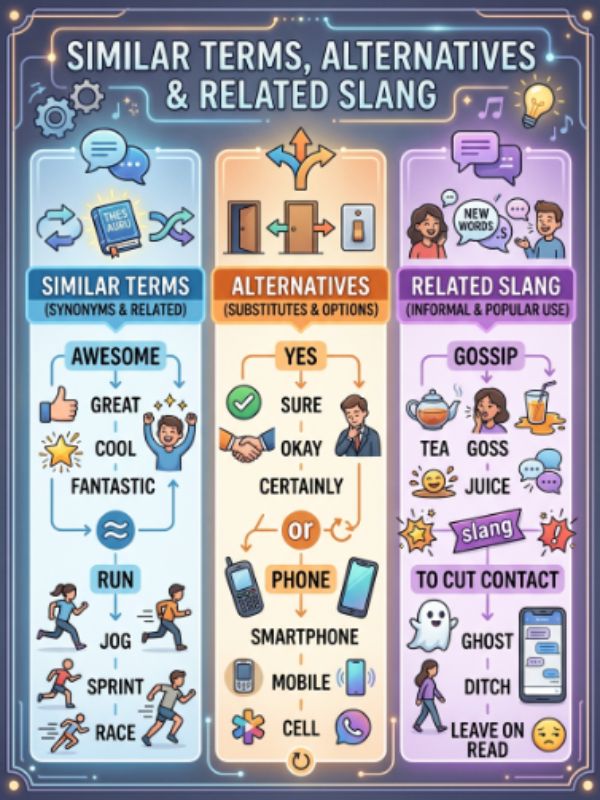
Many similar acronyms share space with IMAO in casual chats. These include:
- LOL (Laughing Out Loud)
- ROFL (Rolling On the Floor Laughing)
- LMAO (Laughing My Ass Off)
- IMO (In My Opinion)
- IMHO (In My Humble Opinion)
- TBH (To Be Honest)
These terms often appear together in the same conversations, since chat culture favors short, expressive reactions.
Examples of IMAO in Real Chat Situations
- Friend 1: “Did you see that dog trying to catch its tail?” Friend 2: “IMAO yes, I can’t stop laughing.”
- Comment under a meme: “IMAO this is exactly how Mondays feel.”
- Group chat: “IMAO I still think tacos are better than burgers.”
- Gaming chat: “IMAO that was the worst move ever, but it worked.”
How to Reply When Someone Says IMAO
Replying to IMAO depends on the mood of the chat. Matching the tone keeps the conversation natural and fun.
Casual Replies
- “Haha same.”
- “Fair point.”
- “Lol true.”
Funny Replies
- “IMAO you’re not wrong.”
- “Bold opinion, I respect it.”
- “IMAO certified.”
Friendly Replies
- “That made me laugh too.”
- “You always have the best takes.”
- “Glad you shared that.”
Formal Replies
If the chat needs a more polite tone, avoid slang entirely.
- “That’s a funny way to put it.”
- “I see your point.”
- “That made me smile.”
Is IMAO Still Popular? Trends & Online Usage
IMAO remains active in casual chats, though it stays less common than LOL or LMAO. It holds steady popularity among users who enjoy playful, expressive slang. Search trends show ongoing interest in the meaning of IMAO, especially from younger users discovering it for the first time.
Social media keeps slang terms alive by recycling them in memes, captions, and comment sections. IMAO benefits from this cycle, staying relevant even as new slang terms appear each year.
Quick Facts About IMAO
- Full form: In My Arrogant Opinion
- Alternate meaning: Laughing, similar to LMAO
- Tone: Playful, joking, casual
- Best used in: Texts, social media comments, group chats
- Avoid in: Formal emails, school assignments, professional messages
Frequently Asked Questions
What does IMAO mean in a text message?
IMAO usually means “In My Arrogant Opinion.” It shows the sender is sharing a bold or joking opinion.
Is IMAO the same as LMAO?
Not exactly. LMAO means laughing hard, while IMAO focuses on sharing an opinion, though some people use it to mean laughing too.
Can IMAO be used in professional chats?
No. IMAO fits casual conversations only. Avoid it in emails, reports, or workplace messages.
Does IMAO mean something rude?
No. Despite the word “arrogant,” IMAO is meant as a light joke, not an insult.
What does IMAO mean on Snapchat?
On Snapchat, IMAO carries the same meaning as elsewhere. It shows laughter or a playful opinion about a snap or message.
Is IMAO still used in 2026?
Yes. IMAO remains part of casual internet slang, especially in comments, texts, and social media captions.
How do you reply to IMAO in a chat?
A simple laugh, agreement, or playful comment works well as a reply to IMAO.
Final Thoughts
IMAO stands as a fun piece of internet slang that blends humor with opinion. It works best in casual chats, social media comments, and quick text replies. Understanding its meaning helps avoid confusion, especially since many people mix it up with LMAO.
Knowing when and where to use IMAO makes texting feel more natural. It fits perfectly in friendly, relaxed conversations, but it should stay out of formal writing. As internet slang continues to evolve, IMAO remains a small but steady part of how people express humor and opinion online.