
Have you seen “igh” in a text or comment and wondered what it means? This short slang term shows up everywhere in modern chats, from group texts to TikTok comments. It looks simple, but its meaning carries a specific tone that many people misread at first glance.
IGH stands for “I guess” or “alright.” People use it to show casual agreement without sounding too excited or too upset. This guide explains what IGH really means, where it comes from, and how to use it the right way in your own conversations.
The Core Meaning of IGH
IGH is internet slang that stands for “I guess” or “alright.” People use it as a short, casual way to agree with something or accept a situation without much enthusiasm. Think of it as a text version of a shrug. When someone sends IGH, they are not fully excited about something, but they are not against it either.
It sits in the middle of a conversation, showing mild agreement or quiet acceptance. Here is a simple way to picture it. If a friend says “we have to reschedule the trip,” and you reply “igh,” you mean “okay, that’s fine, I guess.” You are not thrilled, but you are not upset either.
Featured snippet answer: IGH means “I guess” or “alright.” People use it in texting and social media to show casual agreement or mild acceptance of a situation.
What Makes IGH Different From Just Saying “Okay”
At first glance, IGH looks like a shortcut for “okay.” But the two words carry different feelings. “Okay” often sounds neutral or even positive. It can mean full agreement. IGH carries a softer tone. It usually signals that the person is going along with something even though they may not be fully happy about it.
Here are the small differences:
- “Okay” feels direct and clear.
- IGH feels casual, relaxed, and sometimes a little reluctant.
- “Okay” can be used in formal texts. IGH stays strictly informal.
- IGH often shows a mood of quiet acceptance rather than enthusiasm.
So when someone types IGH instead of “okay,” they are usually adding a small layer of emotion. It might be mild disappointment, tiredness, or simple indifference.
Where Is IGH Commonly Used?
IGH shows up across many platforms where casual chat is the norm. It fits naturally into fast, informal typing styles.

You will most often see it in:
- Text messages between friends
- Instagram comments and DMs
- TikTok comment sections
- Snapchat chats
- Twitter or X replies
- Discord servers
- Group chats among younger users
The term thrives in spaces where people type quickly and skip full sentences. It rarely appears in formal writing, work emails, or professional messages.
IGH in Everyday Texting
In a normal text thread, IGH usually answers a question or reacts to a plan. For example:
Friend: “Movie night got pushed to Sunday.”
You: “igh, that works.”
This shows soft agreement without extra explanation.
IGH in Social Media Comments
On platforms like TikTok or Instagram, IGH often appears as a one word reply to a post or another comment. Someone might comment “igh” under a video that presents a surprising update, showing they accept the news calmly.
Is IGH Casual, Rude, or Just Neutral?
IGH is casual, not rude. It is one of those texting terms that carries a relaxed, low effort tone rather than an aggressive one. However, tone always depends on context. If someone asks a serious question and gets a one word “igh” in return, it might feel dismissive. In a light hearted conversation, the same reply feels perfectly normal.
A simple rule to remember: IGH is neutral by default, but the surrounding conversation decides how it lands. Use it with people who understand your texting style to avoid confusion.
Origins and History of IGH Slang
IGH grew out of African American Vernacular English (AAVE), where “igh” was used as a spoken sound representing agreement, similar to saying “aight” or “alright” out loud. Over time, this spoken expression moved into text form.
As texting culture grew, especially through Black Twitter and hip hop influenced online spaces, IGH became a written shortcut. It spread through music lyrics, social media captions, and casual online banter before becoming common slang across many different online communities.
By the early 2020s, IGH had fully crossed into mainstream texting slang. Younger generations picked it up quickly because it matched the fast, clipped style of modern digital communication.
Different Contexts and Use Cases

IGH is flexible. Its exact feeling shifts slightly depending on how and where it appears.
| Context | Example | Meaning |
| Agreeing to a plan | “igh, let’s meet at 6” | Casual acceptance |
| Reacting to bad news | “igh, that sucks but okay” | Reluctant acceptance |
| Ending a conversation | “igh, talk later” | Casual closing |
| Responding to a request | “igh, I’ll send it” | Mild agreement |
| Reacting to gossip or news | “igh” (as a standalone comment) | Acknowledgment without strong opinion |
This table shows how one small word can carry several shades of meaning depending on the situation.
IGH as an Agreement
Most commonly, IGH shows agreement. It works like a quick nod in text form.
IGH as a Reaction to News
Sometimes people use IGH to react to something surprising or slightly negative, similar to saying “well, okay then.”
IGH as a Conversation Closer
IGH can also signal that a chat is wrapping up, similar to saying “alright, that’s it for now.”
Hidden, Sensitive, or Misunderstood Meanings
IGH does not carry any hidden explicit meaning. It stays firmly in the category of casual agreement slang. Some people worry that new abbreviations always hide something inappropriate, but IGH is one of the more straightforward terms in modern texting slang.
The only sensitivity comes from tone. Since IGH can sound slightly reluctant, it may unintentionally seem cold or distant if the other person expected a warmer reply. This is not because the word means something negative, but because short replies in text often lose emotional context.
Common Misunderstandings of IGH
People often confuse IGH with other similar looking terms. Here are the most common mix ups.
- Confusing IGH with “high,” since they look alike when typed quickly
- Assuming IGH always means enthusiastic agreement, when it often signals mild acceptance
- Thinking IGH is rude, when it usually reflects a relaxed attitude
- Mixing up IGH with “IGHT,” which is another version of “alright”
- Believing IGH only works in negative situations, when it also fits positive or neutral replies
Understanding these differences helps you use IGH correctly and avoid awkward misunderstandings in chat.
How to Respond When Someone Says IGH?
If someone sends you IGH, you do not need a long reply. Short, casual responses work best since IGH itself is short and relaxed.
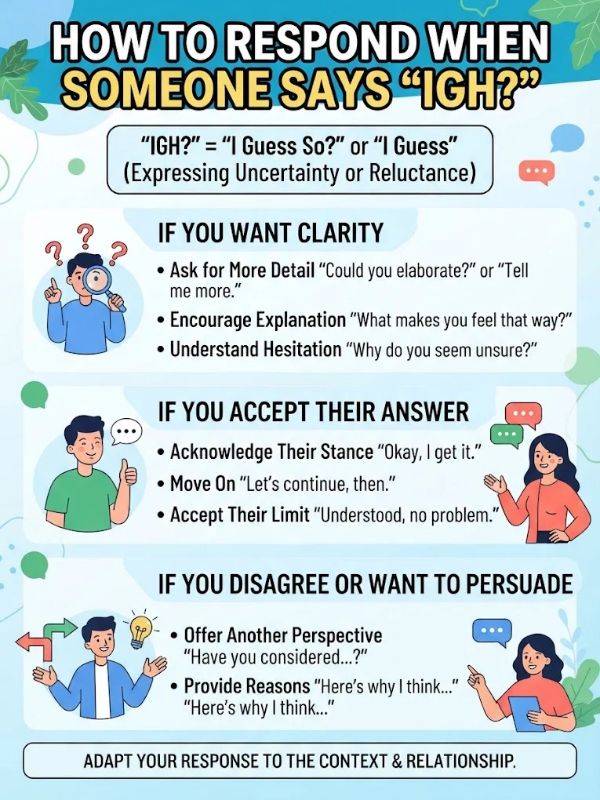
Good ways to respond include:
- “Alright, sounds good.”
- “Cool, let’s do that.”
- “Okay, I’m down.”
- A simple thumbs up emoji
- “Bet” (another casual agreement term)
If the IGH seems to carry mild disappointment, you can also add a caring follow up, such as “you good?” This shows attentiveness without making the conversation heavy.
Alternatives and Synonyms for IGH
Many other slang terms share similar meaning with IGH. Knowing these helps you understand a wider range of texting language.
| Term | Meaning |
| IGHT | Alright |
| Bet | Agreement or confirmation |
| K | Simple acknowledgment |
| Fine | Casual acceptance |
| Sure | Neutral agreement |
| Okay then | Mild reluctant agreement |
| Aight | Spoken version of alright |
These terms often appear interchangeably in fast paced chats, though each carries a slightly different tone.
How the Meaning Shifts Depending on Context
The exact feeling behind IGH depends heavily on punctuation, capital letters, and surrounding words.
For example:
- “igh.” with a period can feel more final or slightly annoyed.
- “IGH!!” in capital letters with exclamation marks can feel more excited or surprised.
- “igh lol” softens the tone and adds humor.
- A plain “igh” with no punctuation usually feels neutral and relaxed.
This shows how small text details change the emotional weight of the same three letters.
Common Mistakes People Make With IGH
Even experienced texters sometimes misuse IGH. Avoid these common errors.
- Using IGH in formal messages, such as work emails or professional chats
- Overusing IGH to the point where conversations feel flat or low effort
- Assuming everyone knows the term, especially older audiences or professional contacts
- Using IGH sarcastically without adding context, which can confuse the other person
- Typing IGH when a fuller explanation is actually needed
Slang works best when used in the right setting. Save IGH for casual chats with friends, not client emails or academic writing.
IGH vs Similar Casual Replies
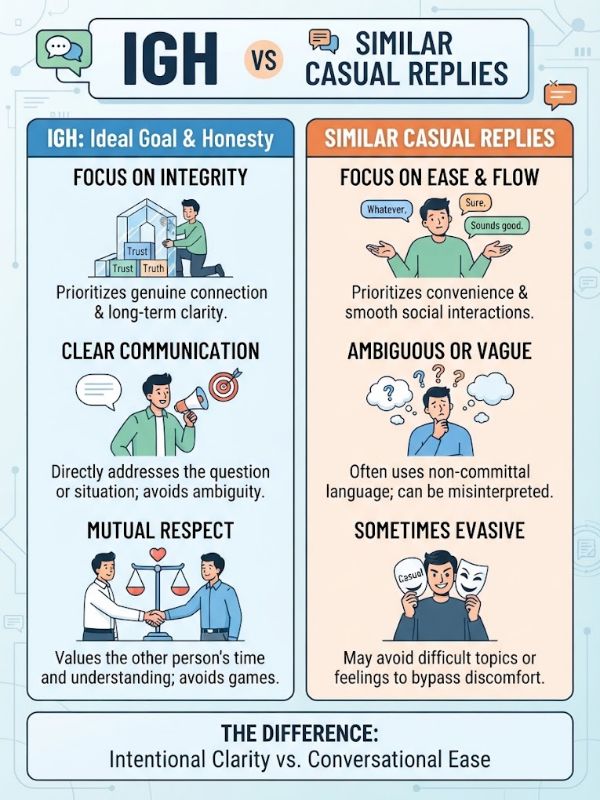
Here is a clear comparison between IGH and other commonly used short replies.
| Term | Tone | Best Used For |
| IGH | Mild acceptance, slightly reluctant | Casual plans, light agreement |
| K | Very neutral, sometimes cold | Quick acknowledgment |
| Bet | Confident agreement | Confirming plans enthusiastically |
| Fine | Slight annoyance | Reluctant agreement |
| Okay | Neutral to positive | General agreement |
This comparison shows why word choice matters, even among short casual replies. Each term sends a slightly different emotional signal.
When Should You Use IGH?
Use IGH when you want to show casual agreement without sounding overly excited or overly negative. It fits perfectly in relaxed chats with friends, group messages, or comment sections where tone stays light.
Avoid IGH in situations that need clear, detailed communication, such as work discussions, customer service messages, or conversations where misunderstandings could cause real problems. In these cases, a full sentence works much better than a short slang term.
Frequently Asked Questions
What does IGH mean in texting?
IGH means “I guess” or “alright.” It shows casual agreement or mild acceptance in a text conversation.
Is IGH the same as IGHT?
No. IGH usually means “I guess,” while IGHT is a shortened spelling of “alright.” They can sound similar but carry slightly different meanings.
Is IGH rude to use?
IGH is not rude on its own. It reflects a relaxed, casual tone, though a very short reply can sometimes feel dismissive depending on the conversation.
Where did IGH originate?
IGH comes from African American Vernacular English, where it started as a spoken form of “alright” before becoming common texting slang.
Can IGH be used in professional messages?
No. IGH stays informal and works best in casual chats. Avoid it in emails, work chats, or formal writing.
What is a good response to IGH?
Simple replies work well, such as “sounds good,” “alright,” “bet,” or a quick emoji reaction.
Does IGH always mean reluctant agreement?
Not always. While it often shows mild reluctance, punctuation and surrounding words can shift it toward a neutral or even lighthearted tone.
Final Thoughts
IGH is a small piece of slang that carries a big role in casual digital conversation. It shows quiet agreement, light acceptance, and a relaxed attitude, all packed into three simple letters. Once you understand its roots and its everyday use, it becomes easy to spot and even easier to use naturally in your own chats.
Slang like IGH keeps evolving as texting culture grows, but its core meaning has stayed steady. Whether you see it in a text from a friend or a comment on your favorite video, you now know exactly what it means and how to respond with confidence.