
Ever seen “SYBAU” in a comment section and had no idea what it meant? This slang term is everywhere right now, showing up in TikTok captions, Discord chats, and group texts. SYBAU stands for “Shut Your B*tch Ass Up.” People use it to tell someone to stop talking, often with a playful or sarcastic edge rather than real anger.
This article explains what SYBAU really means in simple, easy words. You will learn how it started, where it shows up most, and how to use it the right way. You will also see clear examples that show when it is a joke and when it is genuinely rude.
What Does SYBAU Mean?
SYBAU stands for “Shut Your B*tch Ass Up.” It is a blunt way of telling someone to stop talking, usually with a mix of humor and attitude. The phrase carries more edge than a simple “be quiet.” It blends insult with internet sarcasm, which is why it spread so quickly among younger users on social media.
People use it to react to annoying comments, unpopular opinions, or friends who will not stop rambling. Unlike older phrases like STFU, SYBAU has a distinct meme flavor. It rarely feels like a genuine command. Instead, it often shows up as a joke, a roast, or a reaction to something ridiculous.
Quick Answer: SYBAU means “Shut Your B*tch Ass Up.” It is Gen Z slang used to tell someone to stop talking, often in a joking or sarcastic tone rather than a truly hostile one.
The Real Origin of SYBAU
Nobody can point to one exact person or moment that created SYBAU. Like most viral slang, it formed gradually across online spaces before catching fire on a larger platform.
Early Appearances
SYBAU first started showing up in gaming chats, Discord servers, and meme forums somewhere around 2021. Online communities have always shortened long or aggressive phrases into quick acronyms, partly because it saves time and partly because it helps dodge word filters and moderation bots.
Many platforms flag or mute users for typing certain harsh words in full. Abbreviating a phrase like SYBAU let people express frustration without tripping those filters. This workaround gave the term its first real foothold in competitive gaming spaces and meme communities before it reached a wider audience.
Popularity Growth
Once SYBAU escaped niche gaming circles, meme pages on Instagram and TikTok picked it up. Reaction videos, roast threads, and viral screenshots turned it into a recognizable phrase almost overnight.
The acronym worked well because it was short, sharp, and easy to type. It fit naturally into fast paced comment sections and captions where users wanted a quick punch line rather than a full sentence.
SYBAU Meaning in Text, Chat and Social Media
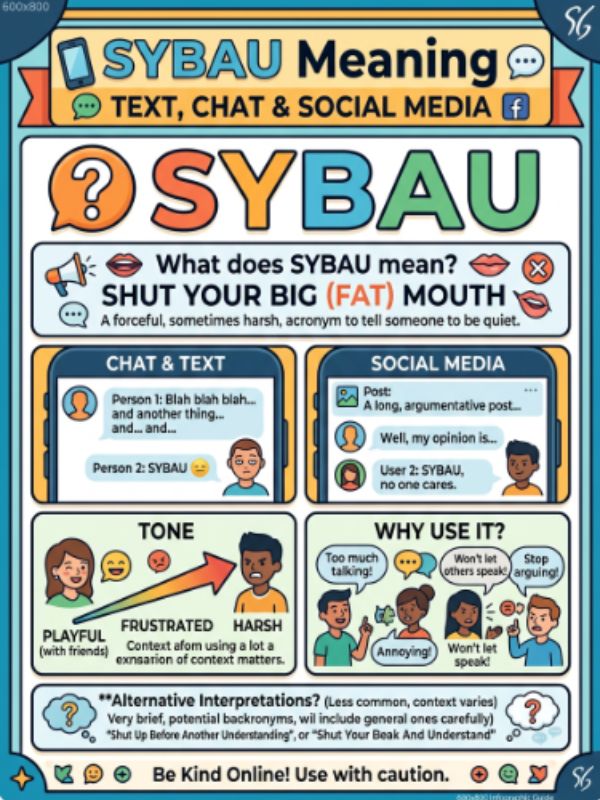
SYBAU shows up differently depending on where you see it. Context always shapes how the phrase should be read.
In Chat Messages
In texting and direct messages, SYBAU usually works as a quick comeback. It fits naturally into casual back and forth conversations between friends.
Common examples include:
- A friend who keeps repeating the same story and someone replies “bro SYBAU 😭”
- A group chat disagreement where one person ends it with “SYBAU and move on”
- Friends trading playful insults back and forth with laughing emojis
On Social Media
Each platform gives SYBAU a slightly different flavor.
| Platform | Common Usage |
| TikTok | Comments under debate videos, reaction captions |
| Meme pages, story replies, casual DMs | |
| Discord | Gaming banter, server arguments |
| Snapchat | Close friend chats, light roasting |
| Twitter/X | Meme threads, reply chains during arguments |
The tone shifts based on platform culture. TikTok comment sections tend to treat it as a punch line, while Twitter reply chains sometimes use it with more real frustration behind it.
SYBAU on TikTok and Other Platforms
TikTok deserves special credit for turning SYBAU into a household term among younger users. The platform’s format made the acronym easy to spread and simple to understand without extra explanation.
How TikTok Popularized SYBAU
Creators started captioning their reaction clips with “SYBAU 💀” whenever responding to a bad take or a cringeworthy moment. Viewers understood the joke instantly, even without any spoken explanation.
The format became a pattern. A creator reacts to something controversial or awkward, adds “SYBAU” as the caption, and lets the audience fill in the rest. This simplicity helped the trend spread across duets, stitches, and comment sections.
Example TikTok Trends
Some of the most common ways SYBAU appeared on TikTok include:
- Reaction videos where a creator gives a side eye look after a questionable opinion, captioned “SYBAU 💀”
- Duet stitches responding to a controversial or funny original video
- Comment roasts under trending debate topics
Across Platforms
Discord and in game voice chats remain a natural home for SYBAU. Whether it shows up during friendly trash talk in a match or a heated server debate, the phrase fits smoothly into gaming culture where fast, blunt reactions are the norm.
SYBAU vs. STFU: What’s the Real Difference?
Both phrases tell someone to stop talking, but they carry very different energy.
| Feature | SYBAU | STFU |
| Full meaning | Shut Your B*tch Ass Up | Shut The F*ck Up |
| Origin period | Around 2021 onward | Early 2000s |
| Tone | Playful, sarcastic, meme driven | Direct, blunt, often serious |
| Common spaces | TikTok, Discord, Gen Z chats | Used broadly across generations |
| Intensity | Feels more personal and targeted | Feels more generic |
Think of STFU as a straight road to the same destination. SYBAU takes a longer route but adds more attitude along the way. Among younger internet users, SYBAU now has its own meme identity that STFU never really developed.
Is SYBAU Offensive or Friendly?
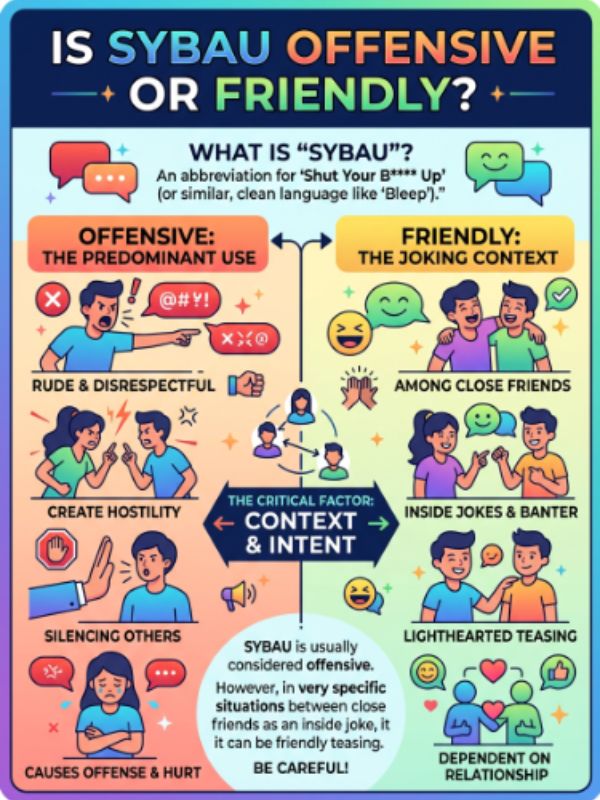
The honest answer depends completely on context. The same three words can read as a joke or as a genuine insult depending on who says it and how.
When It’s Friendly
SYBAU usually feels lighthearted when:
- It is used between close friends who already roast each other often
- Laughing emojis like 💀 😂 😭 follow the phrase
- The overall conversation already has a joking tone
- It appears inside a meme or reaction post rather than a direct fight
Example: “Bro you’ve told this story three times already SYBAU 😂”
When It’s Offensive
The phrase turns hostile when:
- It gets aimed at a stranger with no previous friendly relationship
- No emojis soften the message and the conversation already feels tense
- It shows up in a public comment section meant to embarrass someone
- A younger person directs it at a teacher, parent, or other authority figure
Example: “SYBAU nobody asked for your opinion” aimed at a stranger during an online debate.
What People Say
Reading the room matters more than the words themselves. A phrase that lands as funny in a TikTok comment section could feel completely out of place in a professional group chat or workplace message. Before using SYBAU, it helps to check the tone of the conversation and the relationship with the other person first.
How to Reply When Someone Says SYBAU
The right response depends entirely on intent. A joking SYBAU deserves a different reaction than a genuinely rude one.
If It’s a Joke
If a friend sends SYBAU in a clearly playful way, matching their energy usually works best:
- “Make me 😂” keeps the exchange light
- “SYBAU back 💀” returns the same energy
- “Bro I literally just started talking” plays along with the bit
If It’s Rude
If the message feels genuinely hostile, a few calmer options work better:
- Stay calm and avoid firing back with something harsher
- Address it directly with something like “that felt kind of rude, not funny”
- Ignore it completely, since reacting often gives trolls exactly what they want
- Mute or block the person if the behavior continues
Real Examples of SYBAU in Conversations

Seeing SYBAU used in context makes the meaning much clearer.
Example 1 – Friendly Banter
Alex: Okay so what if we rearranged the whole gaming setup, got a new desk, and maybe a new chair too, and— Jordan: SYBAU bro it’s 2am 😭💀
Here Jordan is simply tired and teasing a friend, not actually upset.
Example 2 – Argument
User1: Your take on that movie is completely wrong. User2: SYBAU, you haven’t even seen the director’s cut.
This version reads as genuinely dismissive since no emoji softens the tone.
Example 3 – Sarcastic Humor
Friend: I can’t believe you forgot to buy milk again. You: SYBAU I was literally at work for 10 hours 😂
The emoji signals that this exchange stays lighthearted rather than turning into a real argument.
Other or Misinterpreted Meanings of SYBAU
Some TikTok users came up with cleaner, family friendly versions of SYBAU to say around parents or teachers. These fake meanings sound wholesome and harmless, so adults never suspect the real phrase behind them. Teens often use these cover stories as a quick excuse if someone asks what the acronym means.
These alternate versions are not real definitions. They exist only as jokes or clever ways to hide the original phrase from people who might not approve. The one true and widely accepted meaning of SYBAU remains “Shut Your B*tch Ass Up.” Everything else floating around online is simply humor or misdirection.
Frequently Asked Questions
What does SYBAU stand for?
SYBAU stands for “Shut Your B*tch Ass Up,” a slang phrase used to tell someone to stop talking, often in a joking tone.
Is SYBAU a rude word?
It can be rude depending on context. Among friends with laughing emojis it usually reads as playful, but aimed at a stranger it can feel genuinely disrespectful.
Where did SYBAU come from?
SYBAU started around 2021 in gaming chats and meme communities before spreading widely through TikTok and Instagram.
Is SYBAU the same as STFU?
Both tell someone to stop talking, but SYBAU carries a more sarcastic and meme driven tone, while STFU sounds more blunt and serious.
How do you respond to SYBAU in a chat?
If it comes from a friend joking around, respond playfully. If it feels hostile, stay calm, address it directly, or simply ignore the message.
Does SYBAU have other meanings?
No genuine alternate meanings exist. Some people online created fake, family friendly expansions as jokes, but “Shut Your B*tch Ass Up” remains the only real definition.
Is SYBAU appropriate to use online?
It depends on the platform and audience. It fits casually among friends on TikTok or Discord, but it is not appropriate in formal or professional settings.
Final Thoughts
SYBAU has become one of the more recognizable slang terms among younger internet users, blending humor with a sharp edge that sets it apart from older phrases like STFU. Its meaning stays simple, but its tone changes completely depending on who says it, where it appears, and whether emojis soften the message.
Understanding slang like SYBAU helps you read online conversations more accurately and respond the right way, whether that means joking back with a friend or recognizing when a comment crosses into genuinely disrespectful territory.