


Have you seen SFS in a chat or a comment and wondered what it means? This short term shows up a lot on social media today. People use it in DMs, comments, and stories every single day. It looks confusing at first, but the meaning is actually simple.
SFS stands for “Shoutout For Shoutout” in most chats. It means one person promotes another person, and that person promotes back. This guide explains the full meaning of SFS in simple words. You will also learn how it changes across Instagram, Snapchat, WhatsApp, and even business chats.
Understanding SFS Meaning in Text in Simple English
SFS is a short internet term. People use it mostly on social media apps like Instagram and Snapchat. It is a quick way to ask for support from another person online. Think of SFS as a small favor request. One person asks another person to help boost their post, story, or account.
It saves time because typing four letters is much faster than typing a full sentence. The term grew popular because social media rewards engagement. More likes, more shares, and more followers help a post get seen by more people. SFS became a shortcut for asking someone to help with that goal.
SFS Meaning in Text: Simple Definition
In the simplest terms, SFS means “Shoutout For Shoutout.” It is a trade. One person promotes another person’s page, and that person promotes back.
Here is a quick way to remember it:
- SFS is a two way exchange.
- One shoutout leads to another shoutout.
- Both people benefit from more visibility.
For example, if a friend sends you “SFS?” on Instagram, they are asking you to feature their page on your story. In return, they will feature your page on theirs.
Full Form of SFS in Texting
The most common full form of SFS is “Shoutout For Shoutout.” Some people also use it to mean “Solo For Solo,” especially in gaming chats or Snapchat streak communities.
A less common version is “Same For Same.” People use this version when trading likes, follows, or comments on posts. The core idea stays the same across all versions: you give something, and you get something back.
Here is a small table to make this clear:
| Full Form | Common Platform | Meaning |
| Shoutout For Shoutout | Instagram, Twitter/X | Promote each other’s page |
| Solo For Solo | Snapchat | Add a solo picture to a story mentioning each other |
| Same For Same | TikTok, Instagram | Like or follow in exchange for a like or follow |
Why People Use SFS in Chats
People use SFS because growing an online audience takes work. Asking friends and followers for a shoutout speeds up that growth. It feels more natural than begging for follows. Small creators and businesses often use SFS to reach new audiences.
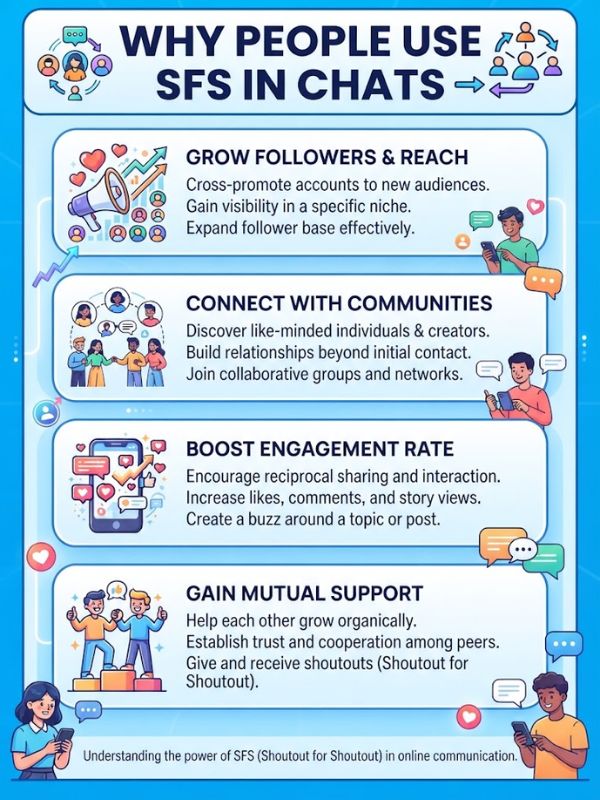
When two pages promote each other, both pages gain exposure to a fresh group of people. This works well when both accounts share a similar audience. There is also a social side to SFS. Friends use it just to support each other. It is a friendly gesture that shows you care about someone’s content or page.
Common reasons people send SFS requests:
- To grow followers quickly
- To support a friend’s new page or post
- To build a network with similar creators
- To keep a Snapchat streak or connection active
- To promote a small business or side project
Is SFS Formal or Informal?
SFS is completely informal. You will not see it in business emails or formal documents. It belongs in casual chats, direct messages, and comment sections. Because it is informal, SFS fits best with friends, followers, and other casual online contacts.
Using it with a stranger in a professional setting would feel out of place. If you are texting a boss or writing a formal message, avoid SFS. Save it for chats where a relaxed tone fits naturally.
How to Use SFS Correctly
Using SFS the right way keeps your message clear and friendly. Here are some simple steps to follow.
Step 1: Ask Clearly
Send a direct message. Something like “Hey, want to do an SFS?” works well. Keep it short and friendly.
Step 2: Confirm the Details
Agree on what each person will post. Will it be a story, a post, or a comment? Confirm the timing too, since some people expect the shoutout the same day.
Step 3: Follow Through
Once you agree, post your part. Trust matters here. If you skip your side of the deal, people may stop trusting your SFS requests in the future.
Common Situations Where SFS Is Used
SFS shows up in many everyday online situations. Knowing these examples helps you spot it faster.
- A small business account asks another small business for a joint promotion.
- Two friends trade Instagram story shoutouts to grow their pages together.
- A gamer types SFS in a chat to ask for a one on one match.
- A content creator asks their audience to do SFS with other fans.
- Someone on Snapchat sends SFS to grow their streak circle.
Can SFS Be Used Sarcastically?
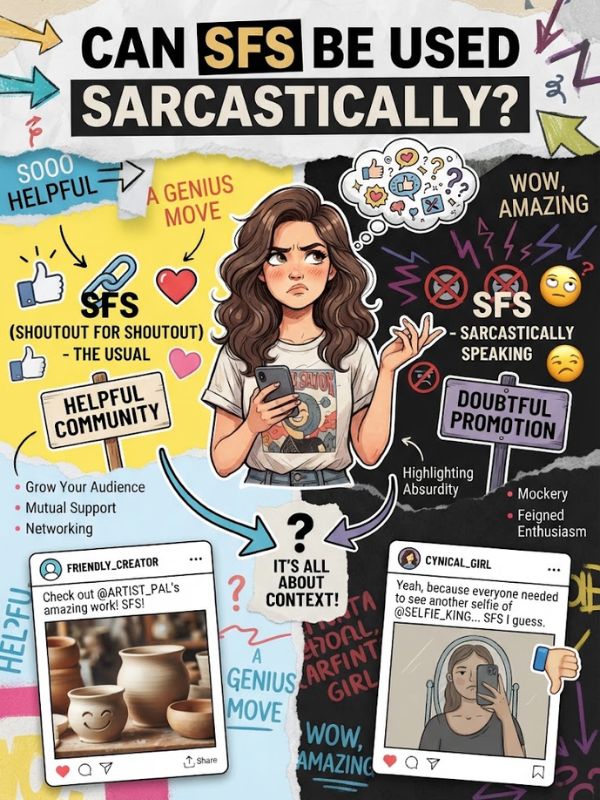
Yes, SFS can carry a sarcastic tone in some chats. People sometimes use it jokingly when a shoutout request feels unnecessary or over the top. For example, if someone posts a joke picture and a friend replies “SFS lol,” they might be teasing rather than making a real request.
| Context | Meaning | Example |
|---|---|---|
| Literal (Instagram/TikTok) | “Shoutout for Shoutout” — mutual promo deal | “SFS? I’ll tag you back” |
| Sarcastic | Mocking someone’s obvious self-promo or fake mutual gesture | “Oh wow, SFS 🙄 real generous of you” |
| Sarcastic (tone shift) | Used when a “shoutout” was clearly one-sided or half-hearted | “You call that an SFS? lol” |
Tone depends heavily on the relationship between the two people chatting. Always read the full conversation before deciding if SFS is serious or playful. Emojis, punctuation, and past messages usually give clear clues.
What is SFS in Instagram
On Instagram, SFS usually means Shoutout For Shoutout. People use it in comments, direct messages, and story replies. It is very common among small creators trying to grow their following. A typical Instagram SFS exchange looks like this. Person A posts a story asking “SFS? Comment below!” People comment their usernames.
Person A then shares those usernames on their story, and those users share Person A’s page in return. Instagram influencers and small businesses use SFS often because Instagram’s algorithm rewards accounts with steady engagement. A shared shoutout can bring a wave of new visitors within a day.
Sfs meaning in Snapchat
On Snapchat, SFS often means Solo For Solo. Users post a solo picture of a friend on their story with a caption tagging that friend. The friend then does the same in return. This trend became popular because it helps Snapchat users show appreciation for close friends.
- “Shoutout for Shoutout” — post/story mention in exchange for one back “SFS on your story? I’ll post you too”
- Used to grow followers by tagging each other’s accounts “Doing an SFS to get more followers”
- “So Fucking Sad” — reacting to a Snap or story “That story was SFS 😢”
It also helps smaller accounts get noticed by a friend’s wider circle of followers. Sometimes SFS on Snapchat still means Shoutout For Shoutout, especially among younger users trying to build a bigger snap network. Context from the chat usually makes the meaning clear.
SFS meaning in whatsapp
WhatsApp does not have public profiles like Instagram, so SFS looks a little different here. On WhatsApp, SFS is often used inside group chats where members promote a channel, business page, or status update.
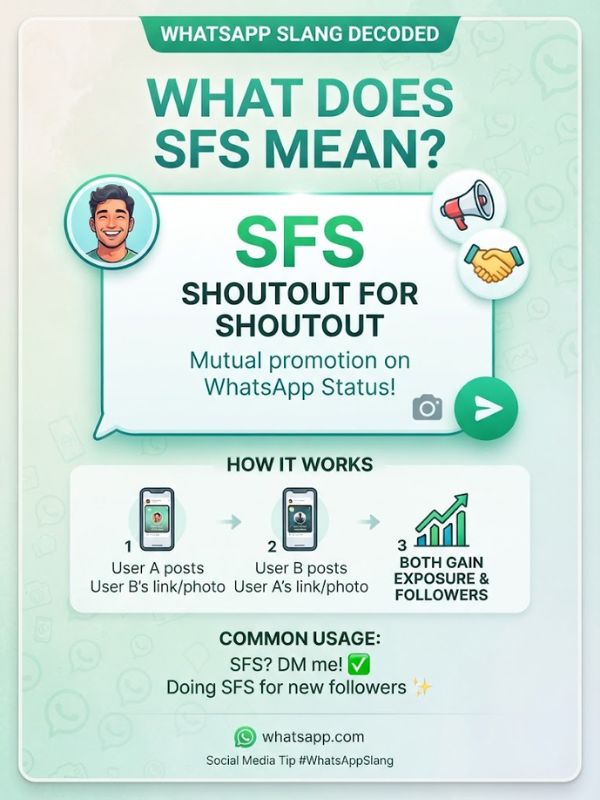
For example, someone might send “Can we do SFS on our WhatsApp status?” This means both people will feature each other’s business or page on their status update for a set number of hours. Small business owners in WhatsApp groups often use this method to promote products without spending money on ads.
Sfs meaning in relationship
In a relationship context, SFS usually keeps its original meaning of mutual support, but it takes on a more personal tone. A partner might ask for an SFS to show public support for their partner’s new project, page, or achievement.
| Context | Meaning | Example |
|---|---|---|
| Relationship texting | “Shoutout for Shoutout” — partners publicly hyping each other on social media | “Let’s do an SFS for our anniversary post” |
| Relationship (alt) | Sometimes used loosely as “Something for Something” — a mutual favor/exchange | “It’s an SFS, you help me, I help you” |
| Sarcastic use | Mocking a one-sided or half-hearted gesture in the relationship | “SFS? You didn’t even tag me back 🙄” |
For example, a partner might post “SFS for my babe’s new business!” This shows love and support in a public way. It signals to followers that the couple backs each other’s goals. This use of SFS feels warm rather than transactional. It focuses on emotional support more than follower growth.
SFS meaning from a girl
When a girl sends SFS, it usually means the same thing as the general definition. She is asking for a shoutout exchange, whether for a personal page, a small business, or a creative project.
Tone matters a lot here. If she sends it with friendly emojis, it likely means a simple social exchange. If she sends it privately to someone she talks to often, it could also be a way to show extra support and stay connected. There is no hidden romantic meaning behind SFS on its own. It stays a social media term first.
SFS meaning in text from a guy
When a guy sends SFS in a text, the meaning also stays consistent. He is asking for a shoutout trade, most often related to social media growth. Sometimes guys use SFS between friend groups to support each other’s gaming clips, memes, or small side projects. The core meaning does not shift much based on gender. Context and platform matter far more than who sends it.
SFS meaning in business
In business, SFS refers to a marketing tactic. Two brands or creators agree to promote each other to reach new customers. This works especially well for small businesses with limited advertising budgets.
Businesses often plan SFS partnerships carefully. They pick partners with a similar target audience so the exchange brings real value.
Here is a quick table showing how businesses use SFS:
| Business Type | SFS Use Case |
| Clothing brand | Trade Instagram story features with another clothing brand |
| Local bakery | Partner with a nearby coffee shop for a joint post |
| Freelancer | Exchange shoutouts with another freelancer in a related field |
| App developer | Trade mentions with a similar app on launch day |
What does sfs mean in retail
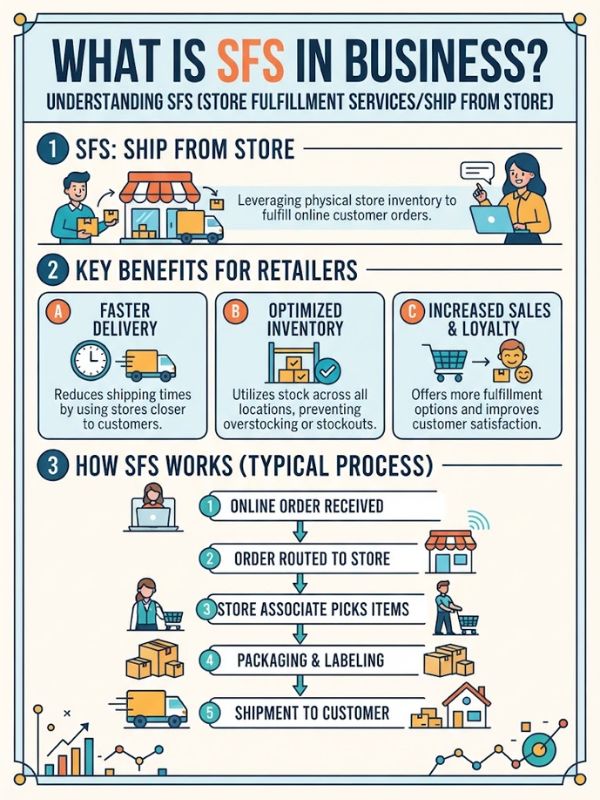
In retail, SFS can also stand for “Ship From Store.” This meaning is completely different from the social media meaning. It refers to a system where an online order gets shipped directly from a local retail store instead of a central warehouse.
Retail businesses use Ship From Store to speed up delivery times and reduce shipping costs. If you see SFS mentioned in a retail or logistics context, it almost always refers to this shipping method, not a shoutout exchange.
This shows why context matters so much with short abbreviations like SFS. The same three letters carry very different meanings across different industries.
Tone of SFS: Friendly vs Promotional
SFS carries two main tones depending on the situation. The friendly tone feels casual and supportive. The promotional tone feels more like a marketing strategy.
- Friendly tone: Used between close friends to show support with no strict expectations.
- Promotional tone: Used by businesses or creators with a clear goal of growing followers or sales.
Reading the message around SFS helps you figure out which tone applies. A short, warm message usually means friendly intent. A message with hashtags, links, or a call to action usually means promotional intent.
How to Reply When Someone Says SFS
Replying to an SFS request is simple. If you want to join in, just confirm and follow through. If you are not interested, a polite decline works fine too.
Here are some easy reply examples:
- “Sure, let’s do it! Sending you my post now.”
- “Not right now, but thanks for asking!”
- “I’m down, just tell me what time works.”
- “Sorry, I don’t do SFS trades, but good luck with your page!”
Keeping your reply short and clear avoids confusion and keeps the interaction friendly either way.
When You Should Avoid Using SFS
There are moments when SFS does not fit well. Avoid using it in these situations:

- In professional emails or workplace chats
- When messaging someone you do not know well, without context
- On formal business pages talking to customers directly
- In sensitive conversations where a casual tone feels out of place
Using SFS in the wrong setting can come across as unprofessional or confusing. Save it for casual social media spaces where the term naturally belongs.
Common Mistakes People Make with SFS
Many people misuse SFS without realizing it. Here are frequent mistakes to watch for.
- Sending an SFS request without following through afterward.
- Using SFS with someone who has a completely different audience, which reduces its value.
- Confusing SFS with unrelated terms in a different context, like the retail meaning.
- Overusing SFS so often that followers start ignoring the requests.
- Forgetting to check platform rules, since some platforms limit spam-like shoutout chains.
Avoiding these mistakes keeps your SFS exchanges effective and trustworthy.
SFS vs SNS vs F4F: Key Differences
These three terms often get mixed up because they all relate to social media growth. Here is a clear breakdown.
| Term | Full Form | Main Meaning |
| SFS | Shoutout For Shoutout | Trade a public shoutout or feature |
| SNS | Social Networking Service | General term for any social media platform |
| F4F | Follow For Follow | Trade a follow, not a full shoutout |
SFS focuses on visibility through direct promotion. F4F focuses only on following each other. SNS is simply a broad term describing social platforms in general, not an action at all.
Other Meanings of SFS in Text
SFS carries different meanings outside social media as well. Here are a few common ones:
- Ship From Store, used in retail and logistics.
- Sorry For Spam, used in group chats after posting several messages in a row.
- Straight From the Source, used when sharing verified or original information.
- Solo For Solo, common in Snapchat friend groups.
Always check the surrounding conversation to pick the correct meaning. The platform and topic usually make it obvious within a few seconds.
Similar Abbreviations Like SFS
Many other short texting terms follow a similar pattern to SFS. Learning a few of these helps you understand modern chat language faster.
- F4F: Follow for follow
- L4L: Like for like
- C4C: Comment for comment
- R4R: Rate for rate
- T4T: Trade for trade
These terms all describe a simple exchange between two social media users, just like SFS.
SFS in Social Media Conversations
Across every major platform, SFS plays a similar role. It connects users, helps small accounts grow, and builds a sense of community. Instagram, Snapchat, TikTok, and Twitter/X all host their own version of SFS culture.
The exact wording may shift slightly by app, but the spirit stays the same. People help each other reach a bigger audience through simple, mutual support.
SFS in Daily Conversations
Outside of business and marketing, SFS also appears in daily casual chats between friends. Someone might send SFS just to check in on a friend’s new post or achievement, without expecting anything major in return.
This everyday use shows how flexible the term has become. It moved from a strict marketing trick into a simple, friendly way of saying “I support you, and I hope you support me too.”
Frequently Asked Questions
What does SFS mean in a text message?
SFS usually means “Shoutout For Shoutout.” It is a request to trade a public mention or feature with another social media user.
Does SFS always mean the same thing on every app?
No. SFS can mean Shoutout For Shoutout on Instagram, Solo For Solo on Snapchat, and Ship From Store in retail contexts.
Is SFS only used by influencers?
No. Regular users, friends, small businesses, and gamers all use SFS in different casual settings.
How do you politely decline an SFS request?
Simply reply with a short, friendly message like “Thanks, but I’ll pass on this one!”
Can SFS be used in a romantic relationship?
Yes. Partners sometimes use SFS to publicly support each other’s projects or achievements online.
Is SFS considered rude to use with strangers?
It is not rude, but it can feel confusing if there is no shared context. A short explanation helps avoid misunderstanding.
What is the difference between SFS and F4F?
SFS involves a full shoutout or feature, while F4F only involves following each other’s accounts.
Final Thoughts
SFS may look like a small, random abbreviation, but it plays a real role in how people connect and grow online today. From Instagram shoutouts to Snapchat solos, this simple term helps friends, creators, and small businesses support one another in a fast and easy way.
Now that you understand every angle of SFS, from its friendly uses to its business meaning, you can use it with full confidence. Whether you send it, receive it, or simply see it in a chat, you will always know exactly what it means.